


I am a UX designer with a background in psychology. I explore the nuances of human behaviour and translate subtle observations about people into tangible experiences through design.

An interactive book that invites people to explore the thoughts and interpretations surrounding everyday worries from different angles.
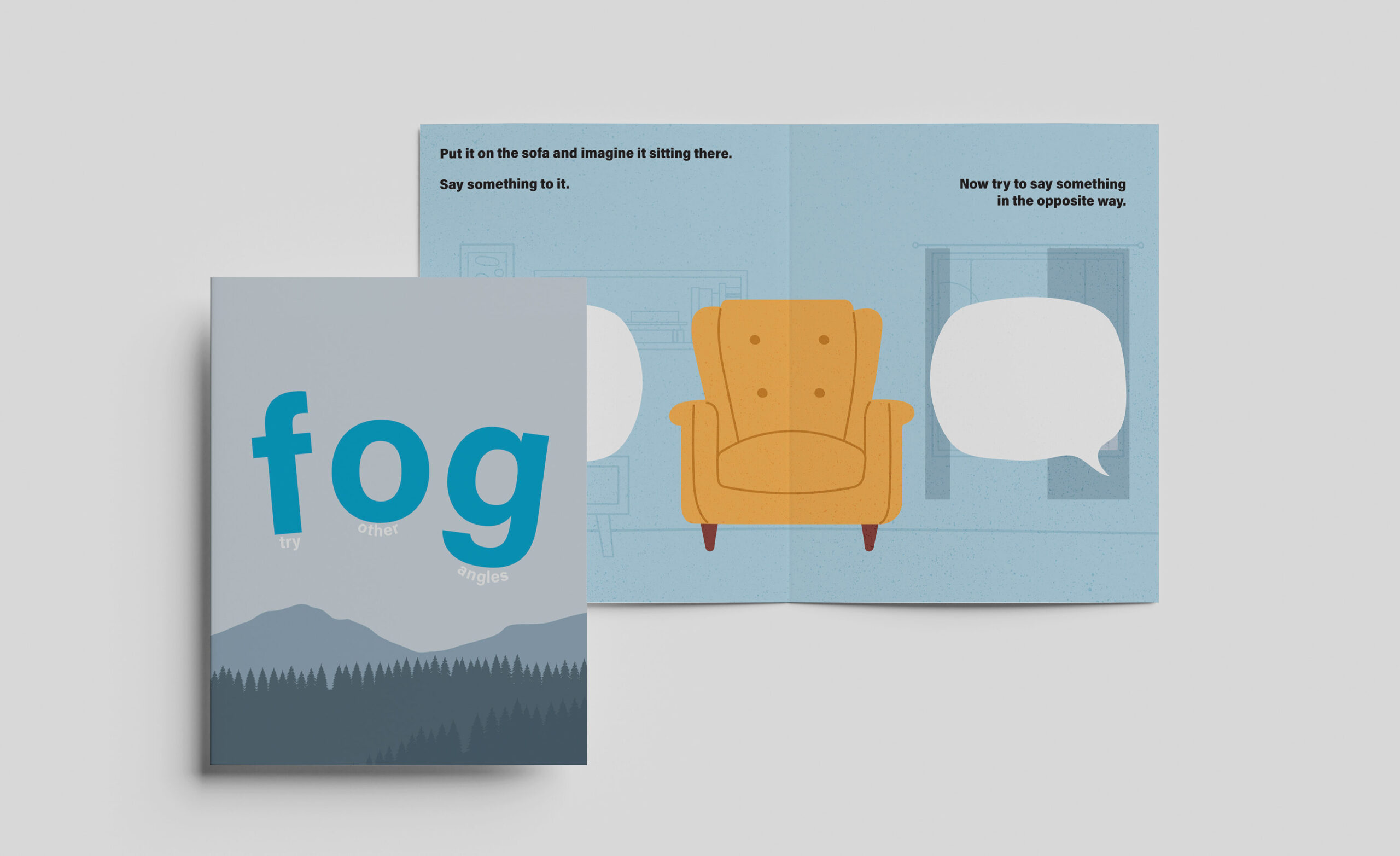
Facing uncomfortable moments can feel demanding.
While therapy offers guided support, it can involve a higher threshold to access. Self-help resources are more readily available, yet books often rely on reading and understanding, while many apps focus on building habits over time.
This leaves an opportunity to bridge the gap between psychological ideas and the people who may benefit from them.
fog translates psychological ideas into an interactive experience, where they can be explored through playful and tangible activities.
The book guides readers through a series of low-commitment activities that invite them to look at the same experience from different perspectives. Each interaction creates space to notice, reinterpret and discover something different for themselves, without prescribing a particular way to think.
“Fog” acts as a metaphor throughout the experience. It may blur the view, but it is only one part of a much wider landscape.
The book begins by introducing fog as a metaphor for thoughts and worries. Users give their worry a name and shape, turning it into a character they can bring with them throughout the experience.
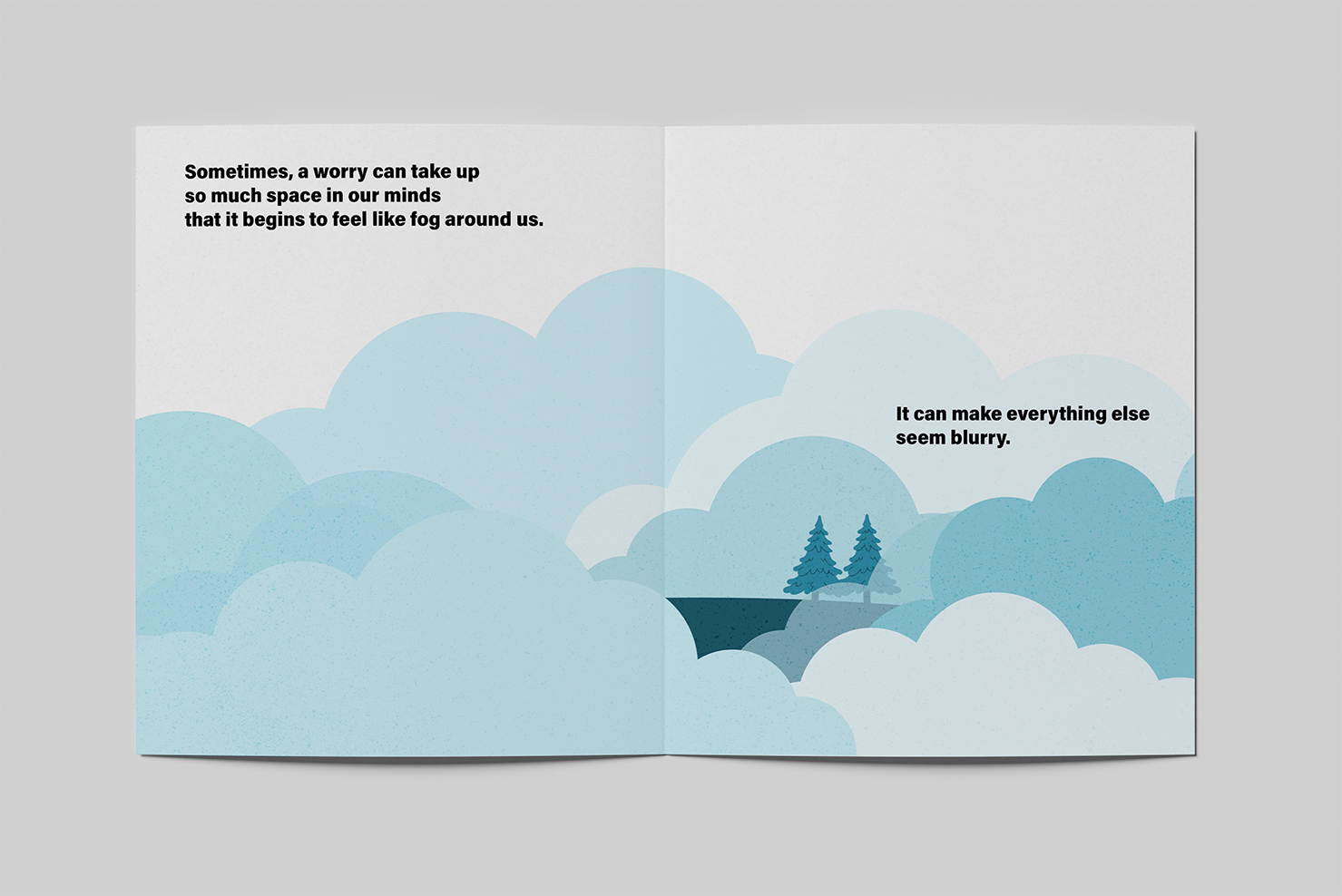
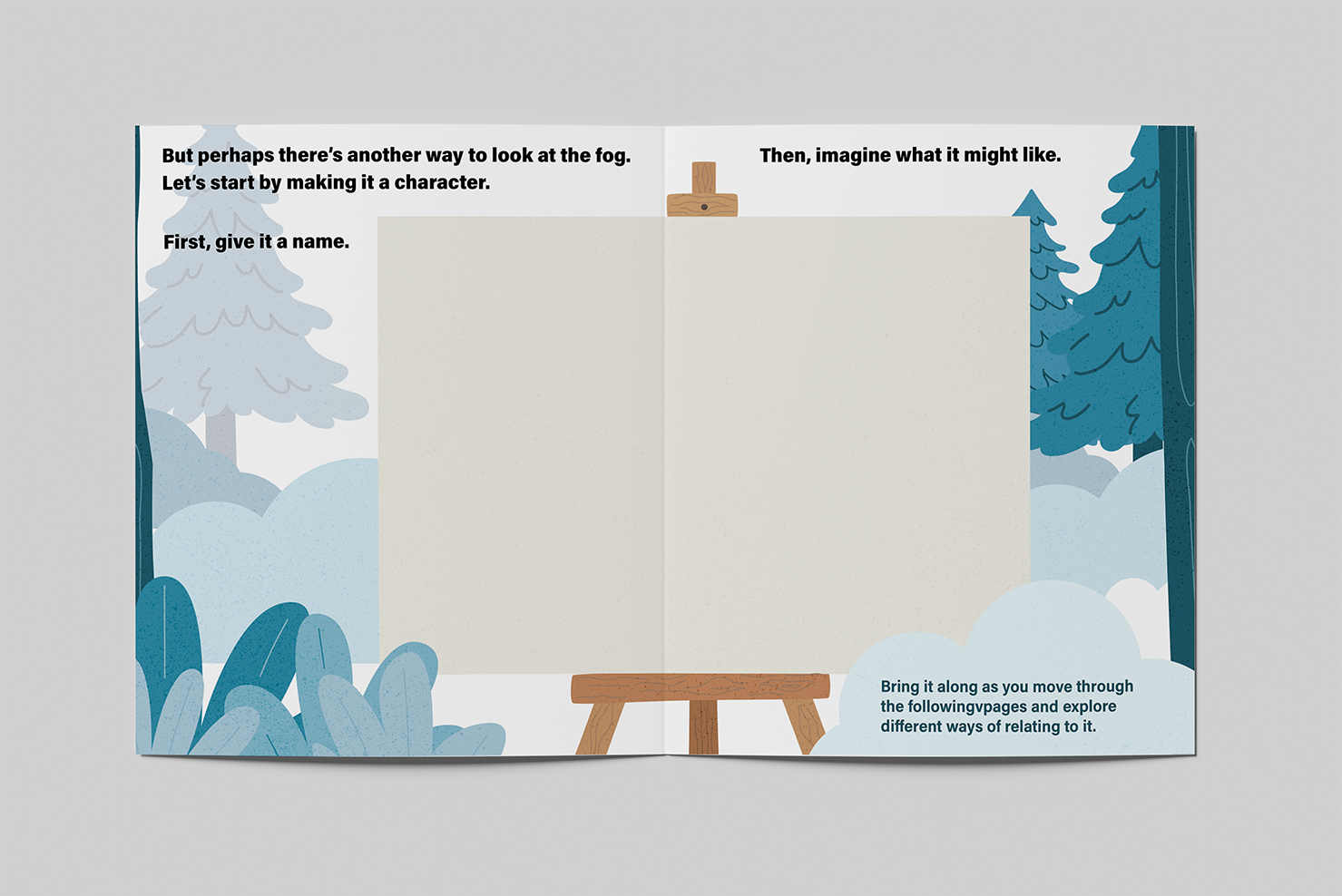
The approach aligns with the idea of externalisation in narrative therapy, this creates some distance from the worry and opens up different ways of relating to it.


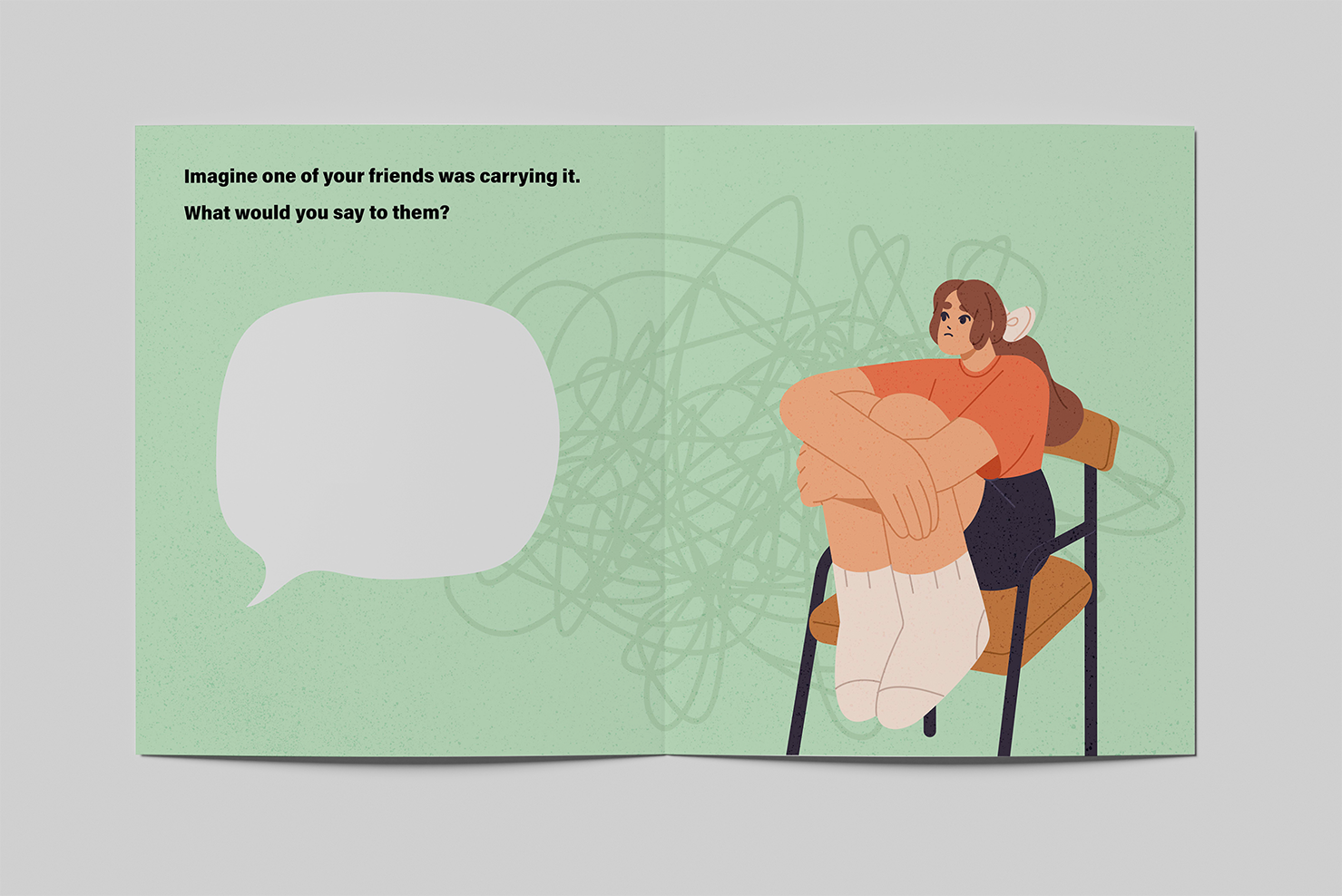
The design process was shaped by five guiding questions, each marking a shift in how I understood the problem and translated emerging insights into the final experience.
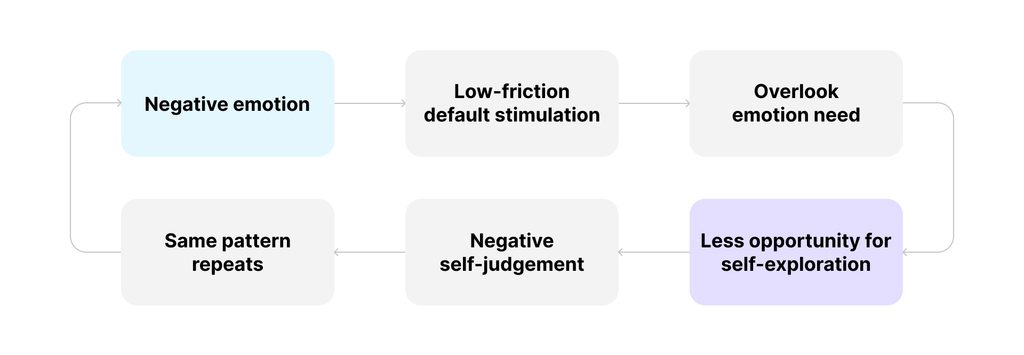
Research identified a cycle in which smartphone use can become a default source of quick relief, leaving little space to notice and explore the emotions behind it. Habitual use can also be interpreted as a personal weakness, reinforcing negative self-judgement.
This initially led me to explore emotional granularity, the ability to identify and differentiate emotions, as a way to support greater awareness of emotional needs.

Using personas and future envisioning helped clarify my initial goal of reducing self-criticism and supporting self-compassion. I then explored emotional granularity through storyboarding and found that it could be too demanding to practise in everyday moments, particularly when easier forms of relief are readily available.
This prompted me to step back and map the broader journey towards self-compassion, from self-awareness and understanding emotions to reduced self-blame and a better relationship with oneself. Seeing it as a longer, multi-stage process made it clear that a single intervention could not support the entire journey.
I therefore narrowed the focus to self-awareness as an entry point towards self-compassion, creating a more focused space for design intervention.
Research suggests that much of our mental processing happens outside awareness, meaning people may not recognise that they are interpreting their own behaviour in a particular way (Wilson & Dunn, 2004). This can make familiar, negative interpretations difficult to step away from.
Looking at existing approaches revealed different ways of addressing this barrier. Self-help apps use practices such as mindfulness to encourage awareness of thoughts, although their purpose may not always feel immediately clear to beginners. Therapy, meanwhile, provides a guided space for exploring experiences from different perspectives.
These findings led me to reframe the insight: people may not realise they are seeing an experience through one particular perspective when other interpretations are also possible.
This shaped my UX vision to help people begin by recognising the possibility of alternative interpretations.

I explored analogous inspiration alongside a range of concepts, using ideation not only to generate possibilities but also to clarify the purpose and boundaries of the design. Making ideas tangible helped reveal what contributed to the intended experience and what did not.
The process moved iteratively between inspiration and ideation. I then used a How–Now–Wow matrix to prioritise ideas and selected a “naming game”, where users give a thought a name to create some distance from it and explore it from another perspective.
The final experience was shaped through prototyping, case studies, and iterative refinement. Early testing showed that a single activity felt incomplete, leading me to combine multiple activities into a longer experience. It also revealed how the same activity could create different interpretations, allowing participants to find their own meaning rather than following a predefined outcome.
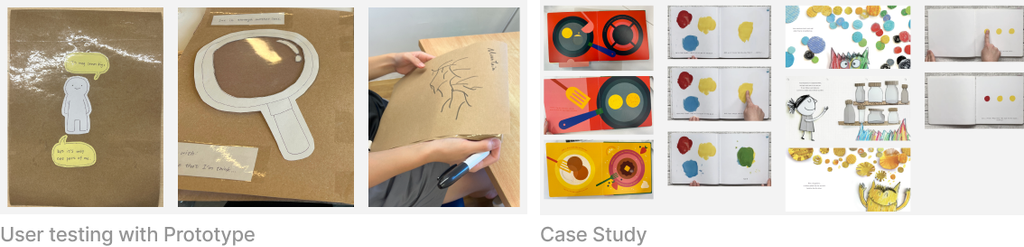
Case studies helped me explore how a physical book could become interactive through narrative and physical engagement. This inspired the metaphor of fog, an opening scenario that draws readers into the experience, and interactions where their own actions contribute to what unfolds.
Continued testing refined the activities, guidance and flow, eventually shaping fog as an interactive book that leaves space for personal interpretation and different ways of engaging with the experience.
Neutral guidance — Invite reflection without directing users toward a particular interpretation.
Participant autonomy — Participants were informed about the potential emotional impact, could stop at any time, and only shared what they felt comfortable disclosing.
Avoid unnecessary emotional risk — Avoiding to lead questions or encouraging deep emotional disclosure beyond what the study was designed to support.
Open-ended prompts — Invite exploration rather than suggest a preferred interpretation.
User-led meaning making — Support self-understanding rather than interpreting experiences for users.
Clear therapeutic boundaries — Avoid diagnosis, judgement, or claims of therapeutic effectiveness.
My background in psychology shapes how I approach design and understand people. It helps me listen without making assumptions, guide conversations with a neutral and open attitude, and pay attention to the feelings and subtle details behind what people say and do. These observations often become a starting point for looking beyond the immediate problem and exploring what may be happening underneath.
I also enjoy drawing from different fields and adapting ideas to new contexts. In fog, psychological perspectives became part of a playful and tangible experience, shaped through interaction rather than simply presented as knowledge. This reflects the kind of authentic experience I value in design: one that gives people room to participate, respond and form meanings of their own.