


I’m a UX designer interested in how people interact with technology and complex systems. I enjoy turning user needs into practical solutions to create intuitive and meaningful experiences.
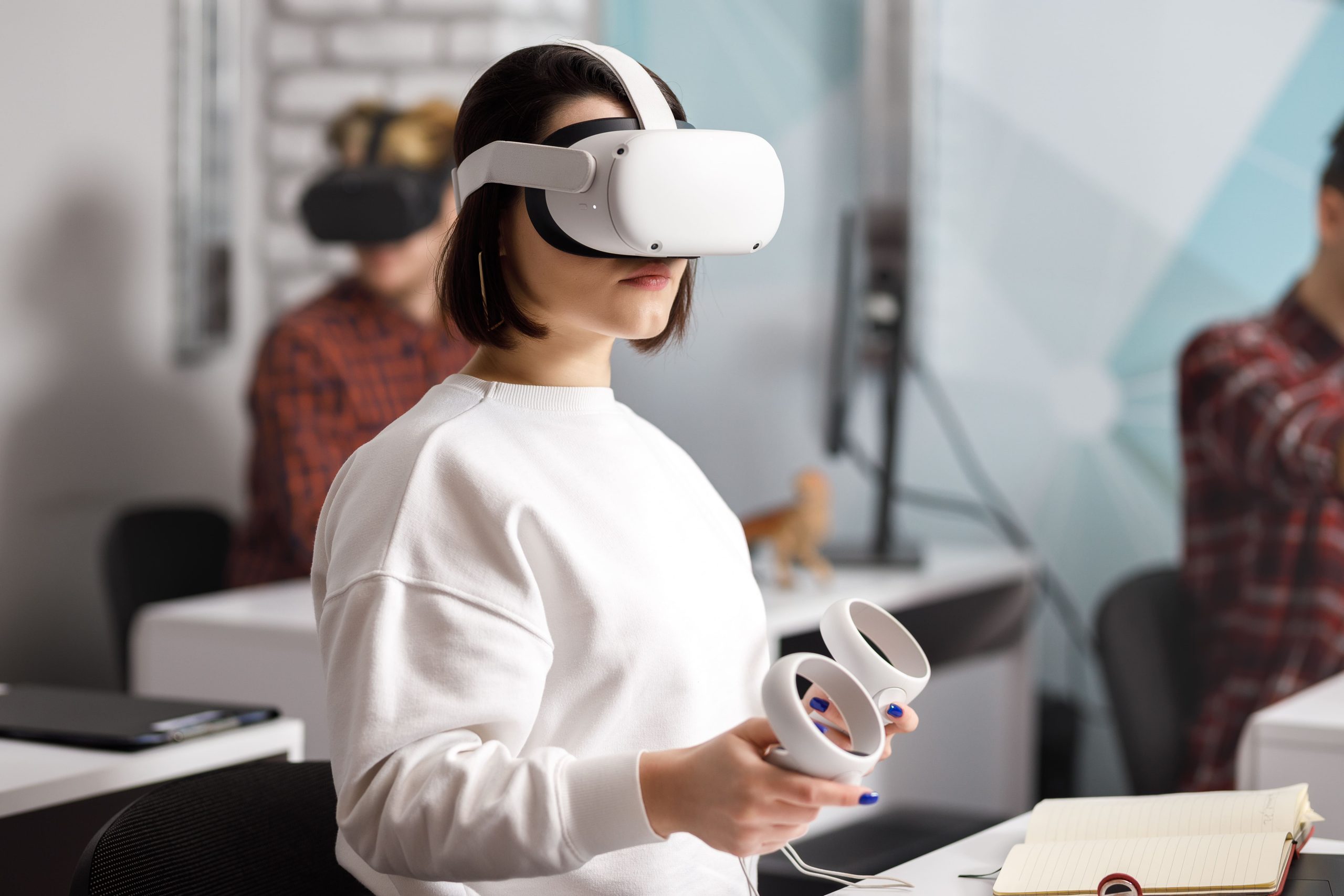
This study aims to evaluate visual and haptic warning feedback in auditory-limited environments, with a focus on its potential to support situational awareness through reaction time, accuracy, cognitive load, and trust. Through mixed-methods research with 16 participants, the results showed that Visual + Vibration feedback was associated with faster responses, lower perceived workload, and higher trust. However, it did not provide a significant additional benefit for accuracy compared with the Visual Cue condition. Overall, the findings suggest that visual and haptic feedback may play complementary roles, but multimodal feedback was not universally superior to single-modality feedback.
According to the World health organization (2026), over 430 million people worldwide experience disabling hearing loss and require rehabilitation, and the numbers are expected to be more than 700 million by 2050. Road traffic crashes also cause 1.35 million deaths and over 50 million injuries or disabilities each year, with pedestrians accounting for 22% of all deaths (Road Accident Statistics | 2026 Edition, n.d.). People with hearing impairments face greater pedestrian safety risks because of limited access to auditory cues from environmental sounds and reduced situational awareness (Schwartz et al., 2022). This issue is not limited to individuals with hearing impairment, as even temporary or simulated hearing reduction has been shown to negatively affect situational awareness (Golob et al., 2024). From a UX perspective, this highlights the need to design warning systems that can communicate environmental hazards effectively without relying only on auditory information.


This study aims to evaluate visual and haptic warning feedback in auditory-limited environments, with a focus on its potential to support situational awareness through reaction time, accuracy, cognitive load, and trust.
RQ1: How do different feedback conditions affect reaction time and accuracy?
RQ2: How do different feedback conditions affect users’ cognitive load?
RQ3: How do different feedback conditions affect users’ trust in the warning system?
This process was followed by the five-stage Design Thinking process, comprising Empathise, Define, Ideate, Prototype, and Test.
Before developing the prototype, I interviewed two participants from Taiwan with hearing loss to understand their experiences as pedestrians. An interview was conducted before obtaining ethical approval; all data were excluded from the formal analysis. Based on insights from Findlater et al. (2019), I adopted a smartwatch-like form for the wearable device to support its integration into everyday use.
Visual Cue
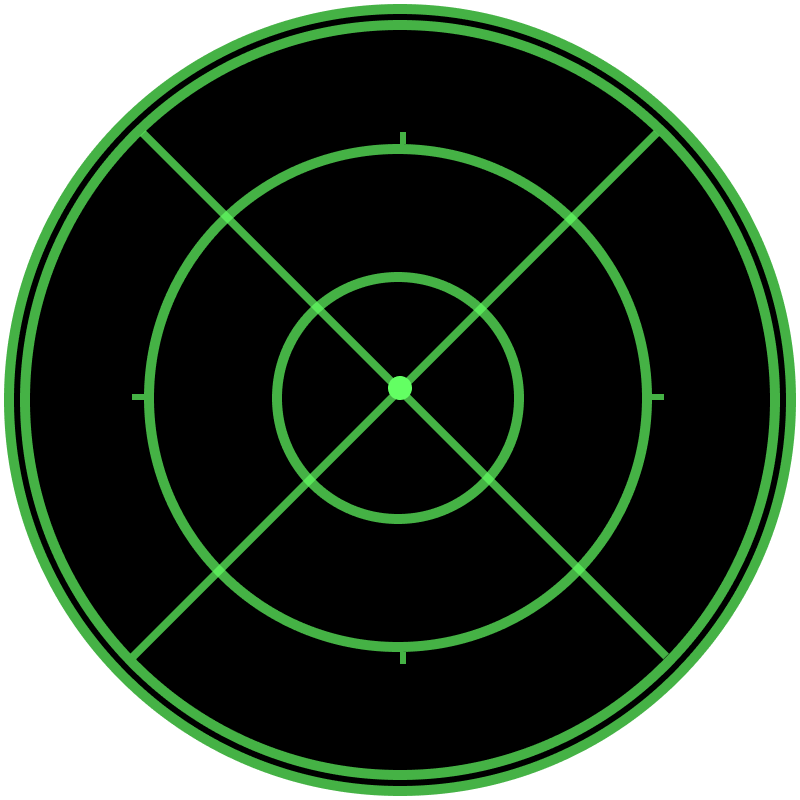
A radar display represented hazards from all directions as red spots that increased in size as they approached the user. The red spot also blinked while moving to attract the user’s attention.
Visual+Vibration Cue
Arduino was planned to control haptic feedback through a vibration motor integrated into a wrist-worn fabric band. The visual interface would use the radar display shown earlier.
Visual
Visual+Vibration
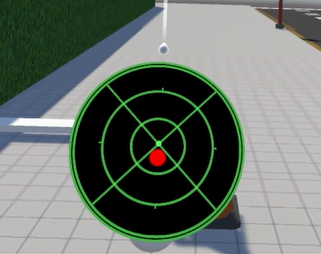
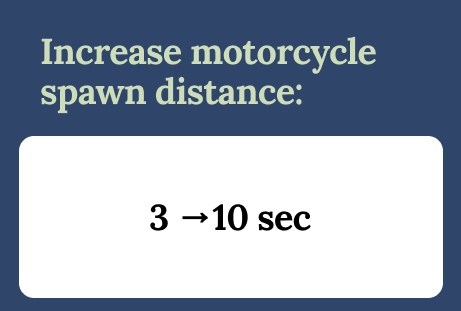
At the beginning of each trial, the participant’s position was recorded. A motorcycle was then generated 40 m behind the participant, triggering the warning.
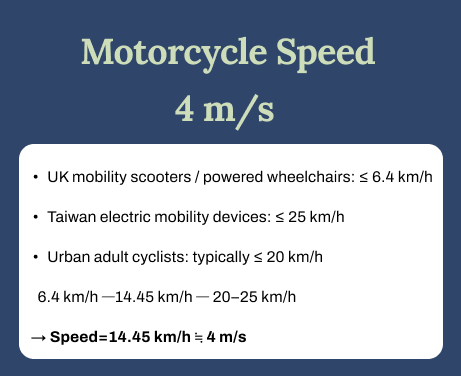
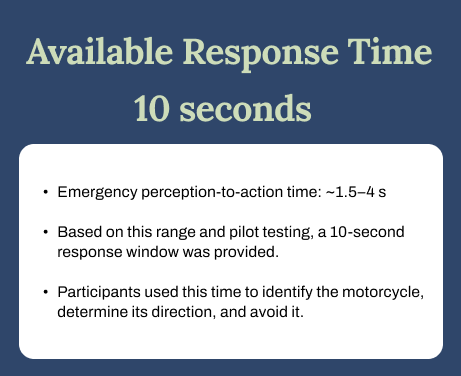

Reaction time and accuracy were developed by operational definitions and automatically recorded by the VR system.
Operational Definition
(1) Reaction Time: Time from warning onset to exceeding the 0.5 m lateral avoidance threshold, recorded only for successful trials.
(2) Accuracy: Whether the participant exceeded the 0.5 m lateral avoidance threshold before the motorcycle reached participant’s initial position.

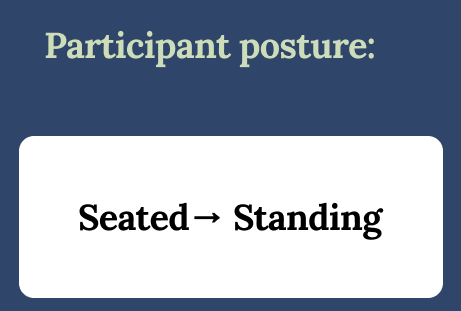
A pilot test was conducted to refine the experimental procedure before the experiment.


Design:
Mixed-methods,within-subjects study with 16 participants (normal hearing & comfortable using VR).
Experimental Equipment:
No cue, Visual Cue, Visual+Vibration Cue
15 trials (each warning signal is triggered 5 times)
Randomly assigned
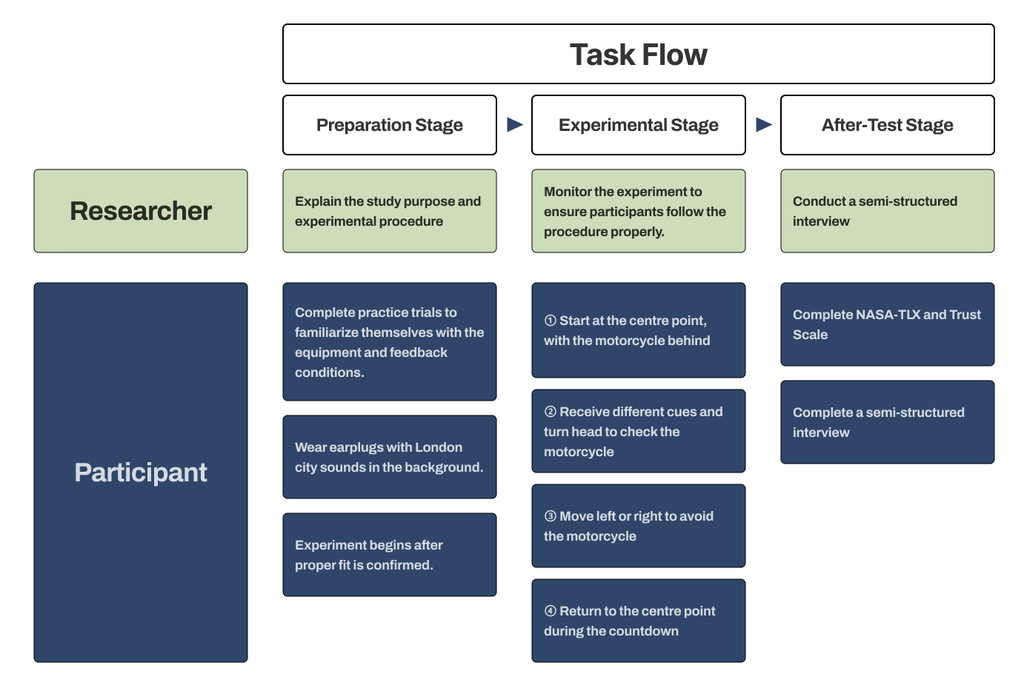
1.Reaction time and accuracy were recorded by VR.
2.Cognitive load and trust were measured using questionnaires (NASA-TLX & Trust in Automation).
Semi-structured interview based on Trust in Automation questionnaires
1.Descriptive statistics &Normality tests (Shapiro–Wilk)
2.Parametric (Paired-samples t-test, One-way repeated measures ANOVA), Non-parametric tests (Friedman test).
Using thematic analysis.
Result (Reaction Time): The No Cue condition was excluded. A paired-samples t-test showed a significant difference between the Visual Cue (M = 1.37, SD = 0.30) and Visual + Vibration Cue (M = 1.19, SD = 0.25) conditions, with p = .012. This indicates that participants responded significantly faster with Visual + Vibration Cue than with Visual Cue.
Result (Accuracy): A Friedman test showed a significant difference across the three conditions, with p < .001. However, post-hoc comparisons showed no significant difference between the Visual Cue and Visual + Vibration conditions.
Interpretation: Vibration acted as an additional attention-capturing cue when visual information alone was not sufficient.
“The vibration could act as an extra cue to alert you, so you could immediately look at the radar, see where the vehicle was coming from, and then take evasive action (P9).”
“I kept holding it up during the experiment, the visual cue was quite noticeable (P5).”
Discussion: Vibration may complement visual feedback by capturing attention, rather than consistently improving performance when visual information is already sufficient.
Result (Cognitive Load): A Friedman test showed a significant difference across the three conditions, with p = .001. However, post-hoc comparisons showed no significant difference between the Visual Cue and No Cue conditions.
Interpretation: Visual warnings provide contextual information but require attention and interpretation, while vibration can provide immediate sensory cues to help redirect attention.
“I have to look at the radar to determine where the hazard is and confirm it, which feels less efficient when I have short reaction time (P16).”
Discussion: Combining the visual and haptic feedback may help distribute information-processing demands and reduce perceived workload.
Result (Trust): A Repeated-measures ANOVA showed a significant effect of warning condition on trust, with p < .001. Post-hoc comparisons were also conducted and showed significant differences between all three conditions.
Interpretation: Adding vibration made warnings more noticeable, potentially allowing more time to respond, while appropriate warning timing may also influence trust.
“Then I would have more time, so I would feel more confident (P5).”
Discussion: Adding vibration may have helped participants notice warnings earlier and left more time to respond, potentially resulting in higher trust.
Extends multimodal feedback research
1. Complex Real-world: hazards vary in speed and direction.
2. Sample Limitation: may not fully represent the experiences and long-term adaptations of people with hearing loss.
1. Validate findings with people with hearing loss in real-world settings.
2. Examine how much warning time pedestrians need to respond to hazards under No Cue, Visual, and Visual +Vibration conditions