

I'm a nurse by background. I remain driven to improve patient outcomes and seek evidenced rationale for care delivery. I am fortunate to have been sponsored to undertake the Ergonomics and Post Graduate MSc by my employer, Medstrom.

My final year project began following conversations with Accident and Emergency (A&E) practitioners. One such conversation detailed a young lady with mental health crisis. Her carers felt they could no longer adequately care for her safely at home and before an enhanced package of care could be actioned, brought her to A&E for care. She remained there for three weeks until the care needed was put in place. She was cared for on a mattress on the floor because there were stability issues if she was nursed on a stretcher and the side rails provided self-harm concerns. The practitioner voiced concerns because of low temperatures in A&E overnight.

Literature search showed that there was no data available detailing temperatures of A&E in the UK. There were very few published studies detailing care of patients nursed on mattresses on the floor.
During phase one, data was collected from 5 geographically diverse sites throughout the UK. This provided real world data to inform phase two testing.

Phase two Environmental Chamber data collection
Phase two data collection took ten volunteers of varying ages and gender into Loughborough university’s bespoke walk-in chamber. Skin (neck, scapula, hand and shin) and core temperature were recorded at baseline (in a room 20-21 degrees C) and intervals (5mins, 10mins and every 10 mins until 90minutes elapsed). Temperature was also recorded under the mattress to detail heat loss from participants to mattress and floor. Participants were asked to provide feedback regarding thermal satisfaction, sensation and preference throughout. Once the 90 minutes had completed participants were asked if they felt conditions would impact sleep and mood.
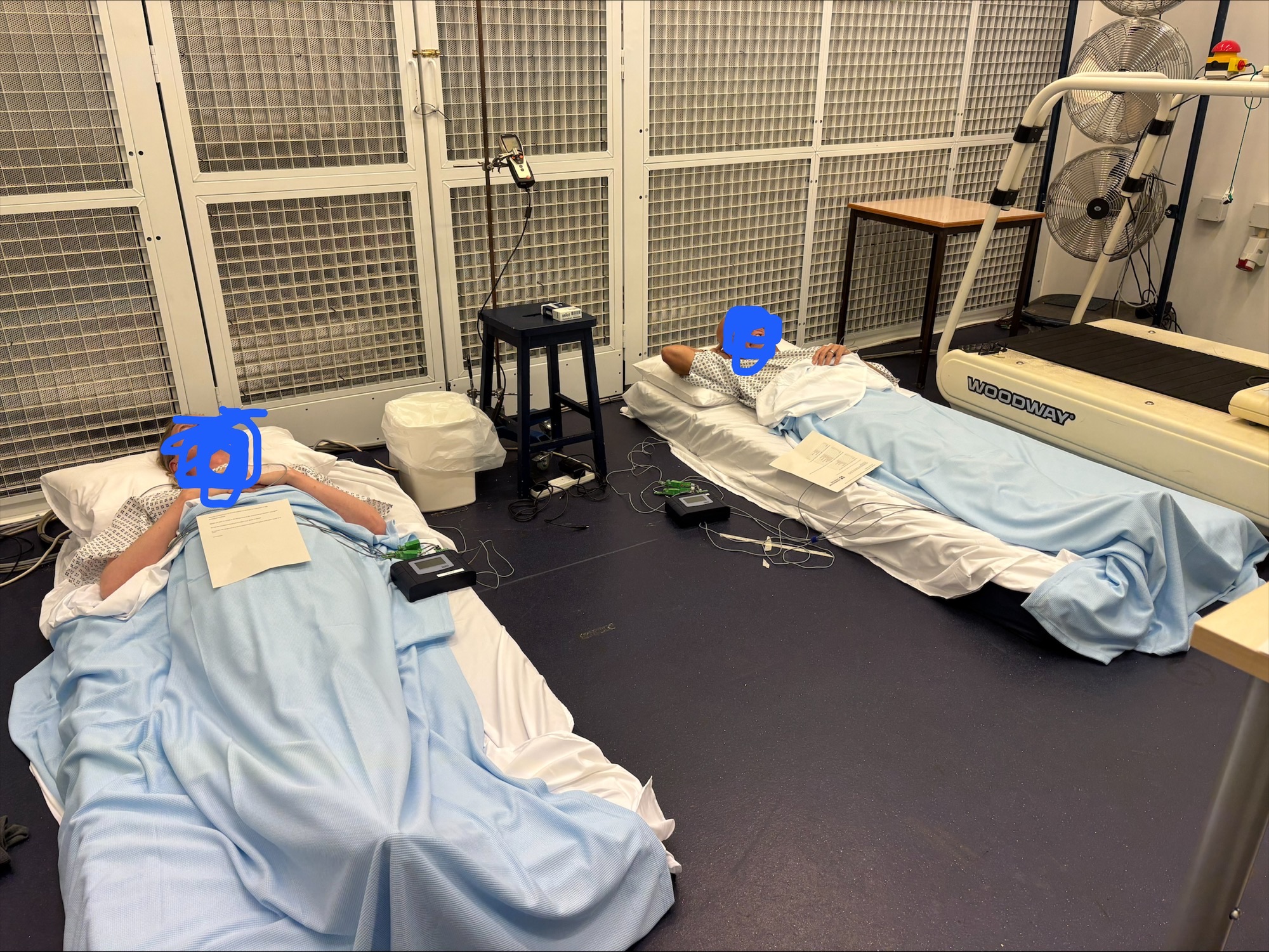

Changes at skin sites showed the following differences versus baseline over the 90 minutes of testing. Neck and scapula showed statistically significant increases versus baseline (p=<0.001; p=<0.001), with large effect sizes (0.791; 0.902). Hand and shin showed statistically significant decreases versus baseline (p=<0.001; p= <0.01), with large effect sizes (0.853; 0.609). Hand and shin are more peripheral and less well insulated. Neck and scapula are proximal and better insulated. Core did not show statistically significant variation to baseline during 90-minute exposure. Heat loss to floor was statistically significant (p=<0.001) with large effect size 0.981.
ABC news (2025). Patient cared for on a mattress on the floor
Carers must use clinical judgement to prioritise risks for vulnerable patients who cannot advocate for their own needs. This study sought to provide data where there were gaps in evidence so clinicians could make informed decisions for vulnerable patients in their care. This study showed no changes during 90 minutes of study in core temperature but significant changes in skin temperature versus baseline. Participants were also able to feedback lack of satisfaction, sensation and preference with conditions of testing. This feedback is important as those nursed in these conditions may not be able to vocalise their experience for themselves.