Ergonomics Consulting, Wellness and Developmental Coaching, Sports Coaching. With specialities in posture assessment and corrective exercises, weight and obesity management, nutrition, fitness, personal development and organisational training.
Final Project
Does incorporating specified ergonomic principals and methods into an existing training plan to correct incorrect technique in an indoor volleyball athlete, improve the correction outcome?
About volleyball
Serve Receive Set Spike Defend Block
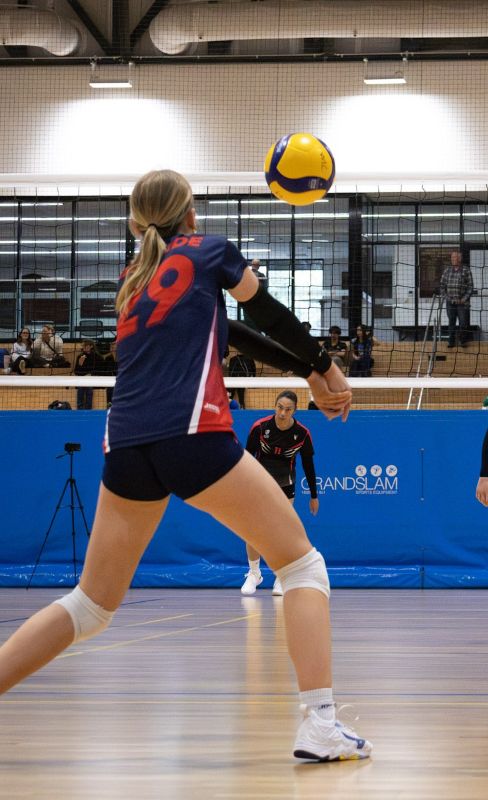
Volleyball is a tricky sport to learn, no bat, no racquet, no stick, just your hands, arm and body to rebound a ball between players in your team and then direct it to the ground on the oppositions side.
At beginner and local levels of competition, it is very easy to learn or develop an incorrect technique, in the effort to make the ball move in the right direction. At a high-performance level, the game can be very quick and requires fast reaction time with every touch of the ball. At that level, little time is spared in game play or even in some training drills, for technique correction.
As a coach and player, I have always been fascinated with the challenge of correcting volleyball technique, because for most people I have encountered attempting to do so, it is usually an elusive endeavour.
How important is correct technique?
At a high-performance level technique needs to be precise and exacting to enable the strategy of the game to work. For individual players of any level, correct technique enables you to play volleyball to your highest ability, also to experience accomplishment. Lastly, one of the most important reasons for correct technique, is injury prevention, as correct technique is also designed to protect the body.
Can ergonomics play ball with volleyball?
Although there has been plenty of research carried out on the subjects of technique acquisition, volleyball, and ergonomics in sport, there appears to have been very little into technique correction in sport, and less again on incorporating ergonomic strategies to support technique correction. The latter an interesting gap in research when you consider that sport, especially a sport like volleyball is almost entirely human factor dependant.
For my study, I wanted to create a framework of ergonomic strategies around a teams’ training and organisational environment, to investigate if they could have a positive influence on technique correction. They were:
Cognitive – widely accepted to be a key part of learning motor skills.
Systems – creating an organised, supportive, expectational, invested organisational environment.
Physical – anthropometry and biomechanical assessments relevant to playing positions and volleyball techniques.
Images: Header – Skynesher (istock, 2014). In text: Stevie Brillantes
Study methods
I partnered with, and extend my thanks to, Melbourne Vipers Australian Super League Volleyball Club, 2026 women’s squad, Volleyball Victoria’s representative club for national competition.
Thirteen athletes (ages 18 to 45) participated in the study. Seven in the intervention group A (ergonomic strategies applied) and six in a control group B (regular coaching approach). The study was over a four week/four training sessions period.
Training session 1: Neutral coaches observed the athletes and recorded how many times throughout the training each athlete performed her technique wholly correctly and how many times incorrectly. Drills were grouped into the following categories – ‘Simple’, ‘Teamwork’, ‘Complex’ and ‘Gameplay’.
The athletes were not aware until the end of the first session, what their individual technique corrections were. They were then briefed on their tasks for the study period. For Group A these included routines, regular interaction with the coach about their technique, cognitive and visual exercises, note keeping, and a conscious focus on their technique correction throughout the duration of the study.
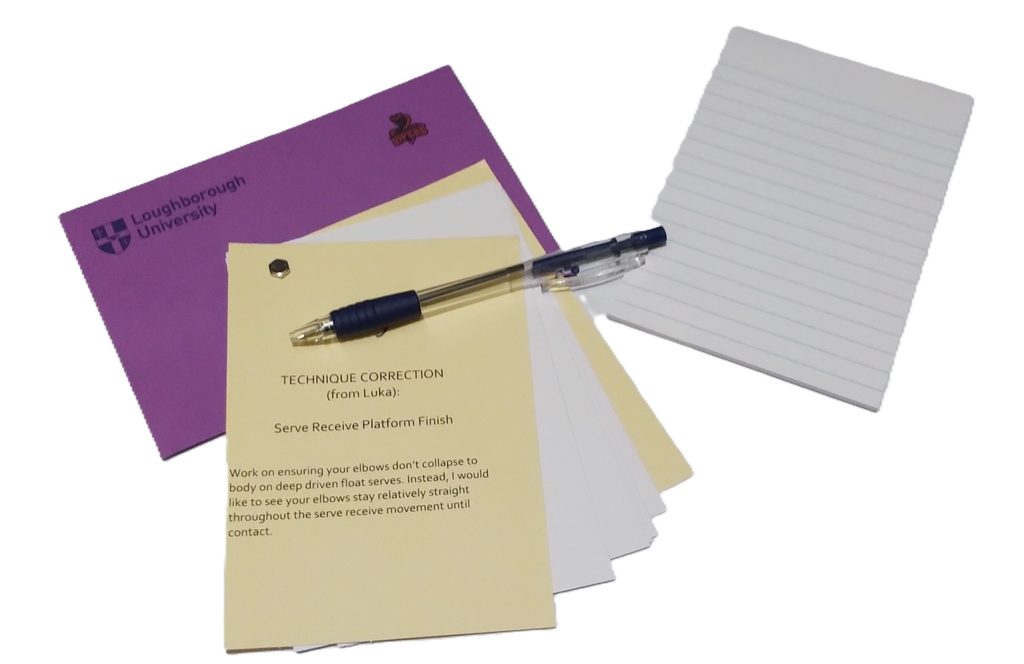
They were provided with a set of prompt cards for their tasks.
Group A Prompt Cards Package
Group A Prompt Cards
The athletes were also asked to complete a questionnaire providing demographic information, sport/volleyball playing history, injury/health history, and any prior knowledge or intervention regarding their nominated technique correction.
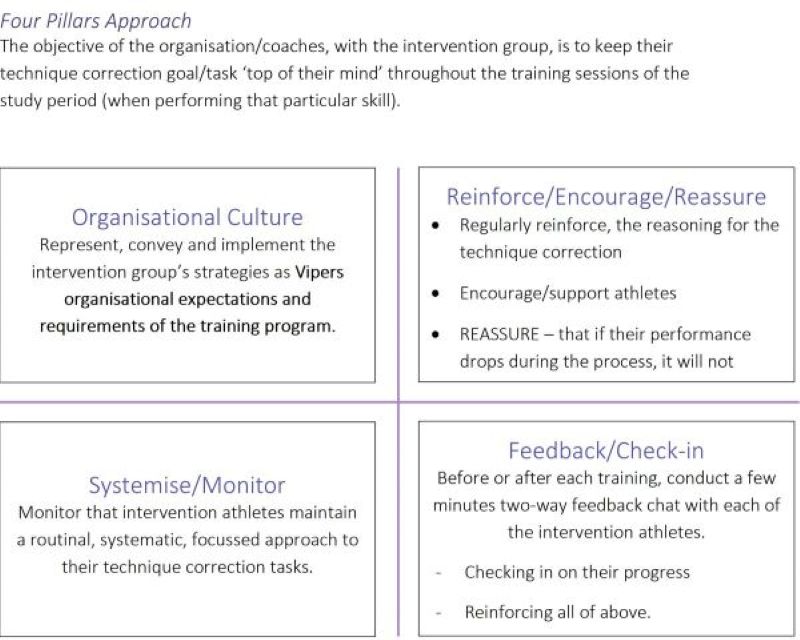
Coaches and managers were also provided with guidelines, as part of their role in establishing a systematic and supportive organisational structure, as follows:
Team Coaches and Manager’s Guidelines
Anthropometry and biomechanics assessments were completed during the study for both groups of athletes, to establish their physical suitability for their playing position in volleyball, if they had any physical limitations to performing their nominated technique correctly, and for Group A, if there were any basic biomechanical interventions that could assist with their technique correction.
Training session 4: The observation coaches returned and reassessed the athletes with the same method as in session 1. Throughout the study, they were unaware which group, A or B, their athletes were part of.
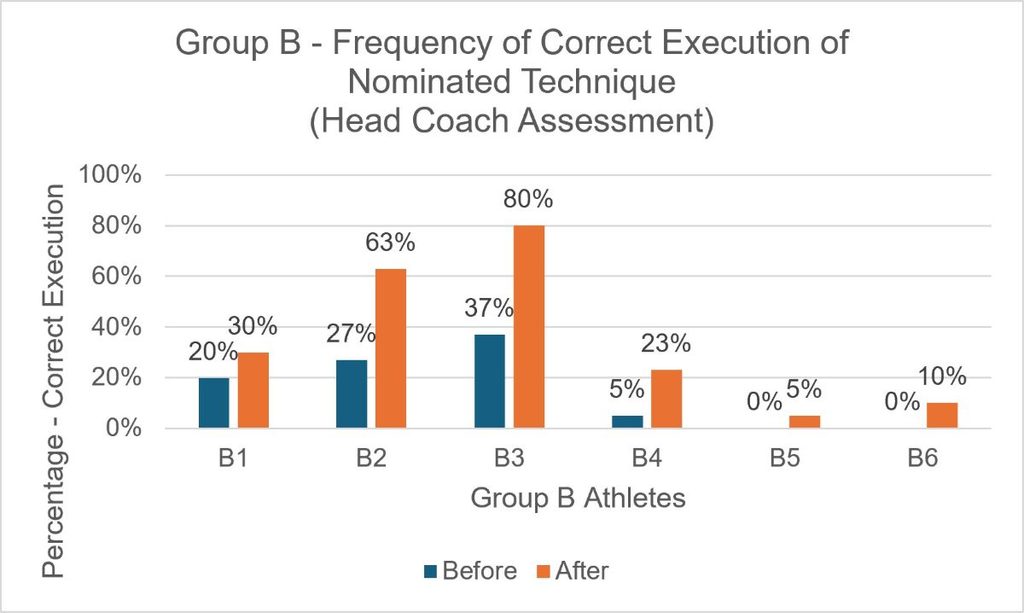
Post study: The team head coach was asked to provide an assessment of each athlete’s correction progress during the study, similar to the assessment criteria the observation coaches had followed.
The athletes also provided feedback of their experience as a participant, and also their perceived percentage of improvement with their technique correction.
Results
Paired sample t-tests were conducted on the data where appropriate, and all results showed significant ranges for technique execution improvement in the sample group.
With just one exception in the observation coaches’ figures, all the athletes nominated technique executions, in both groups improved during the study period.
Additionally, the observation coaches and Head Coach’s data correlated reasonably well for most of the athletes.
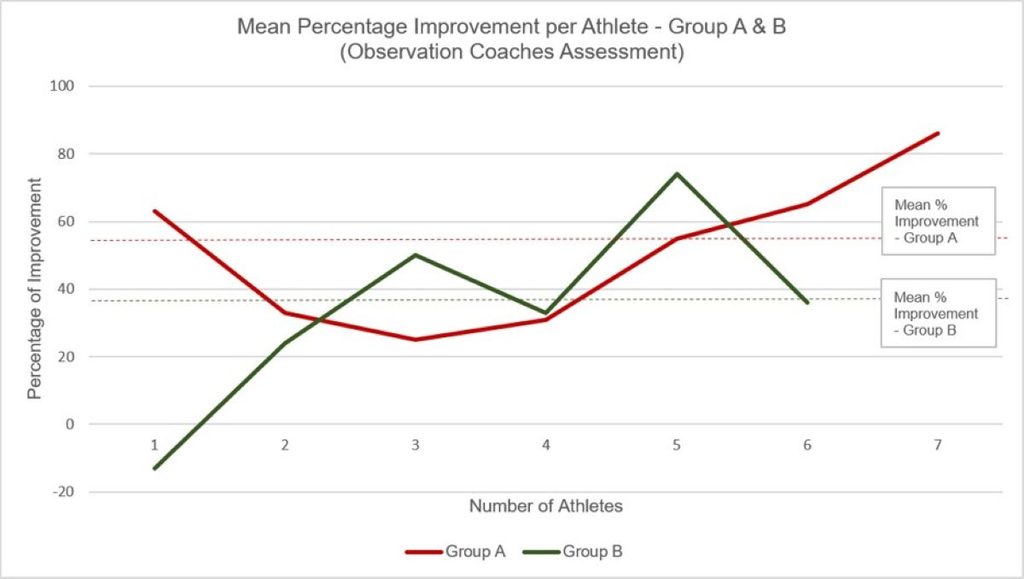
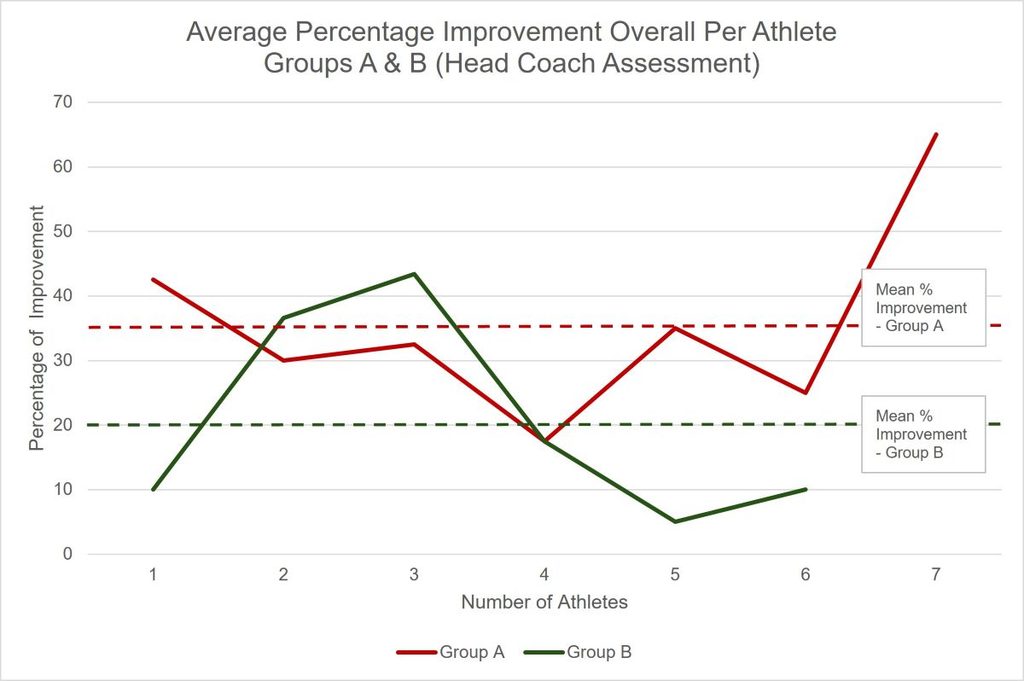
When comparing the Mean Percentage Improvement per athlete, between the two groups and between the observation coaches and the Head Coach, a consistent higher degree of improvement can be seen for Group A (intervention group):
Observation Coaches Mean Average Group A: 51%
Observation Coaches Mean Average Group B: 34%
Difference: 17%
Head Coach’s Mean Average Group A: 36%
Head Coach’s Mean Average Group B: 21%
Difference: 15%
The athlete feedback was positive and supportive of study and all of the athletes except two (one from each group) considered their nominated technique execution had improved.
Conclusion
For a preliminary excursion into the study topic and bearing in mind the limitations of the study – a very short study period for a practical topic, limited resources, a mostly voluntary amateur sporting environment; the results were very dependable, if not conclusive in some areas.
Given both sources of data, (observation coaches/Head Coach) overall showed higher improvement levels for the Intervention Group A compared to Group B, it can be said with a degree of confidence, that the addition of an ergonomic framework around a technique correction training programme for high-performance volleyball is a worthy consideration.
This is further endorsed by the positive uptake and application to the study tasks by the participating athletes and team coaches.
A larger, funded study, in a professional volleyball environment, would be the avenue to test the findings of this study and provide a more comprehensive set of results and conclusions.
I am excited to have hopefully initiated new discussion and perhaps future research into improving performance and mitigating injury from incorrect biomechanical action, across the span of volleyball, for both athletes and coaches.
Other work
Retrospective Human Factors and Systems Review
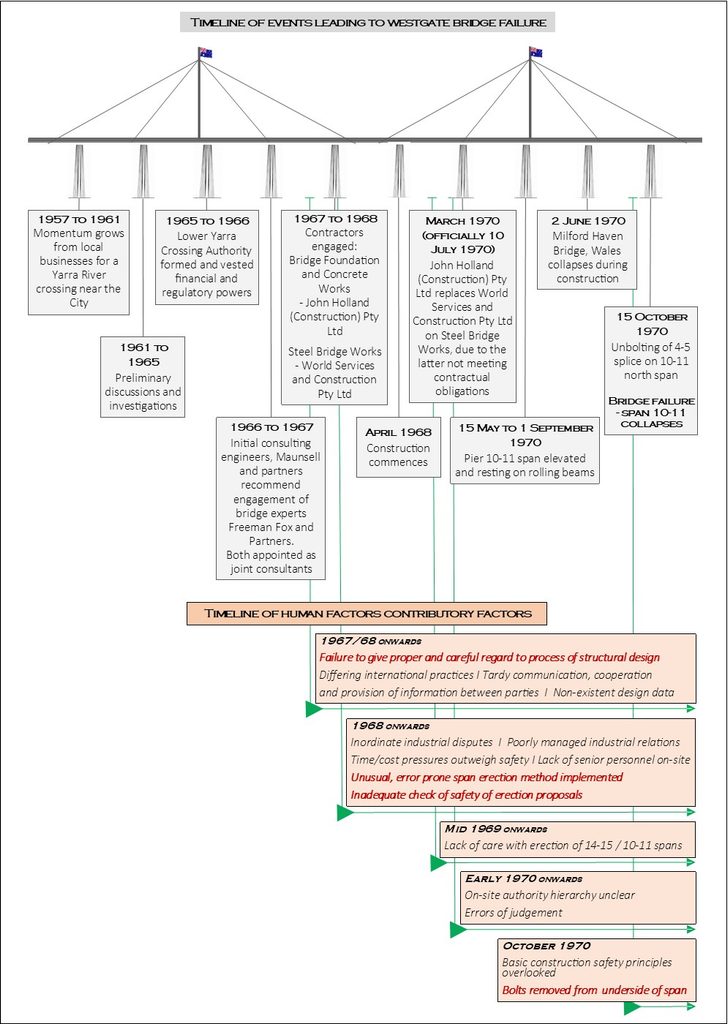
Report content: Review of the mechanics of the bridge collapse, the human factor contributory factors that preceded the collapse, the timeline of events, the subsequent Royal Commission Report and recommendations. A systematic review (FRAM/ACCIMAP models). Retrospective recommendations in line with current day developments.
Images: Sketch of the Westgate Bridge collapse from the inquest files. Public Record Office Victoria – Google Arts & Culture (1971). Marketing material from construction of Melbourne’s Westgate Bridge. Public Record Office Victoria (1969/70). Various Free Images (Freepik, 2026)
Cognitive Ergonomics – Task Review: “The Magic 100” (colloquial term)
A slightly more light-hearted segment.
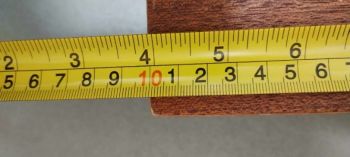
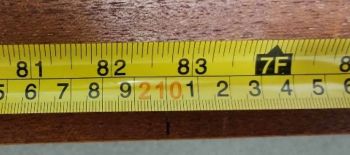
‘The Magic 100’ is an Australian colloquial term used to describe a measurement error that has occurred as a consequence of a ‘trick of the trade’ to achieve the best measurement accuracy possible, particularly in cabinet making and joinery.
It occurs when a cabinet maker/joiner uses a metal retractable tape measure to gauge an exacting length measurement to which to cut a piece of timber or construction material.
To ensure the length is precisely to specifications he/she will start the tape measure reading at 100 mm (10 cm), instead of at the very beginning of the tape. The reason for this is because the hook that is fixed to the end of the tape measure can over time loosen from its original position, meaning that if it is used as a starting point, the first 100 mm measured can actually amount to more than 100 mm.
For the measurement adaption system to work, the operator needs to add on the excluded 100 mm to the end measurement. I.E. If a piece of timber is meant to be 2000 mm in length, the operator will measure from 100 mm to 2100 mm.
‘The Magic 100’ occurs when the operator forgets to add on the 100 mm starting point.
The report explored the cognitive contributors to the error occurring (long-term memory, mental models, sustained attention).
Thank you for showing interest in my studies and PG showcase 🙂