

I am an industrial designer focused on product development and technology application. I drive my design process through hands-on prototyping, advanced CAD, and rigorous testing.
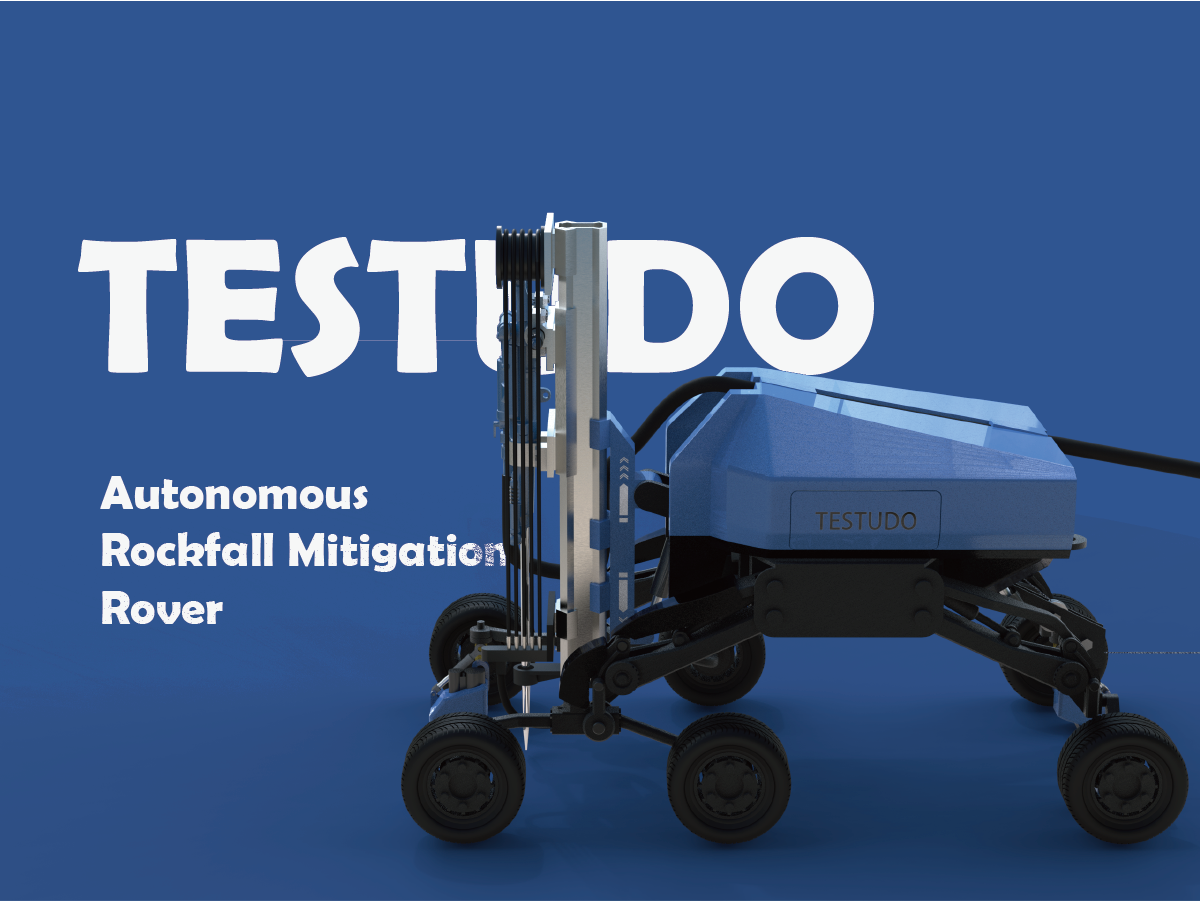
Autonomous Rockfall Mitigation Rover

TESTUDO was engineered to bridge a critical design gap in high-altitude, suspended working environments where traditional support devices, such as air-leg pushers, are rendered completely useless. By transitioning from manual reliance to autonomous mechanical assistance, my core objective is to achieve true ‘human-machine decoupling.’ This design physically removes workers from the high-risk operation zone, fundamentally eliminating severe occupational health hazards like Hand-Arm Vibration Syndrome (HAVS).

Work Scenario
TESTUDO is making its way toward its target location across a rock face with a near-70-degree incline. Its six-wheel bogie suspension system flexibly adapts to the rugged terrain; combined with a low-slung suspension design, this maximizes normal force, allowing the tyres to grip the steep cliff face firmly and ensuring stable movement even at extreme angles.

Mood Board
The conceptual ideation phase is driven by a heavy mechanical aesthetic, characterised by straight edges and exposed structures. It integrates rugged geometric volumes and chamfered features extracted from multi-legged robots and heavy construction vehicles, while core components are enclosed in protective armor plating inspired by robotic dogs. This approach aims to endow TESTUDO with striking visual tension and indestructible reliability, ensuring its form language perfectly aligns with its hardcore engineering nature for tackling extreme, high-altitude, and heavy-payload environments.

Sketch
The ultimate design concept centers on the structure, with the outer shell form serving as a secondary element. The extensively exposed steel framework not only vividly conveys the robot’s raw power, but also ensures absolute rigidity under extreme operating conditions and facilitates on-site maintenance. This visual contrast pushes the hardcore engineering aesthetic of “form follows function” to its absolute limit.
Prototyping and Testing

To achieve precise posture control, absolute grip, and stability on the cliff face, multiple physical prototypes were built and tested. Through this iterative process, I continuously optimised the ultra-low suspension point and center of gravity layout, successfully eliminating the pitch-over moment and maximizing normal force.
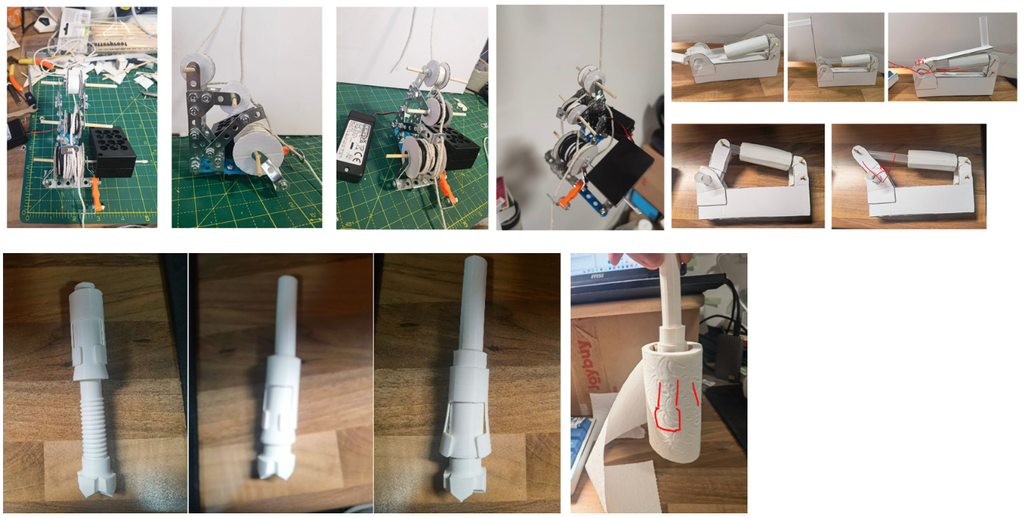
To ensure full-system functionality, I built and tested structural prototypes for the elevation mechanism, the rock drill adjustment system, and the anchoring drill module.

Through rigorous testing and calculations, I determined that the rover’s maximum operational angle, when relying solely on gravity, is 70°. To surpass this limitation, I engineered this Active Anchoring System to physically lock the chassis onto the rock face, enabling operations on even steeper inclines. While the prototype successfully validated the mechanical feasibility of the design, the current deployment time highlights an area for future optimisation.
Final Design


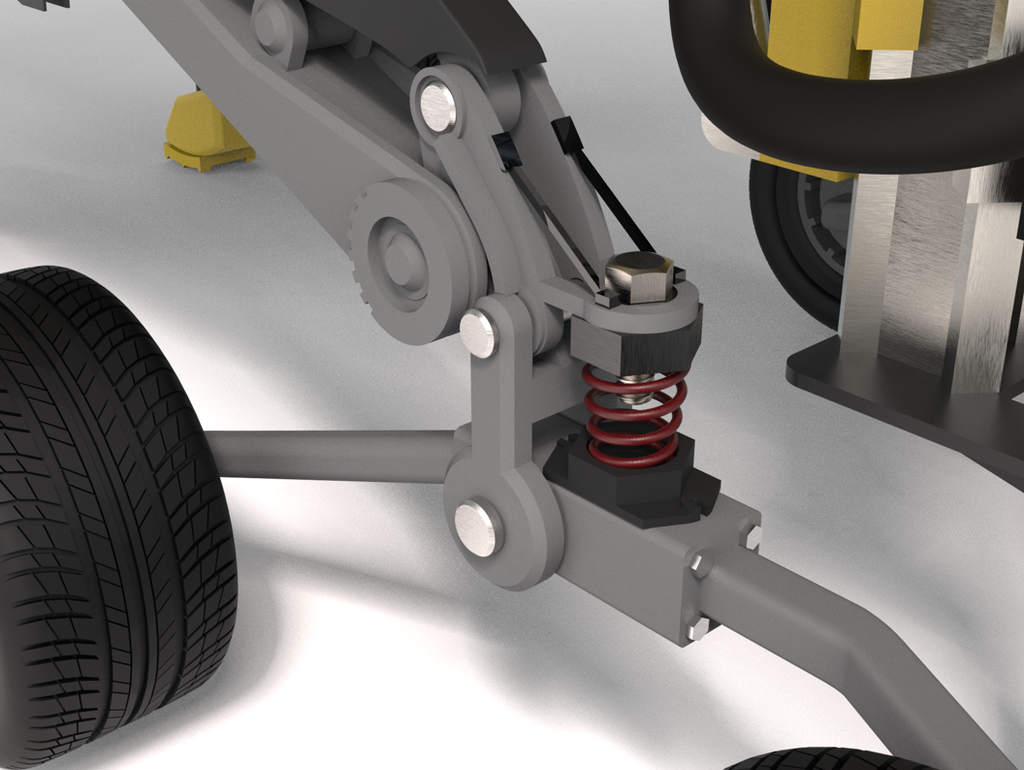
The specific spring model selected based on the data for the dual-wheel structure, along with the corresponding adjusted internal structure.

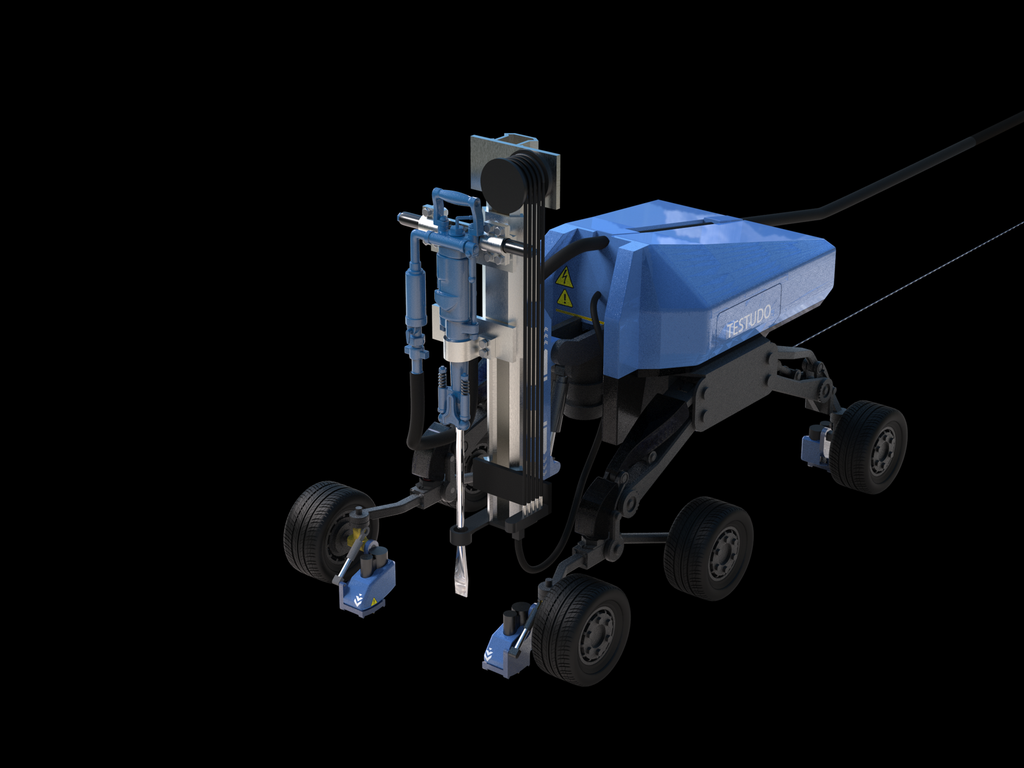
Mounted on the wheel structure, this system utilises a concentric drill and expansion anchor. It is designed to physically lock the rover to the cliff face in under 15 seconds, allowing operations beyond the 70° gravity limit.

An adjustable connection structure that prevents contact with the rock face while providing the optimal center of gravity.
