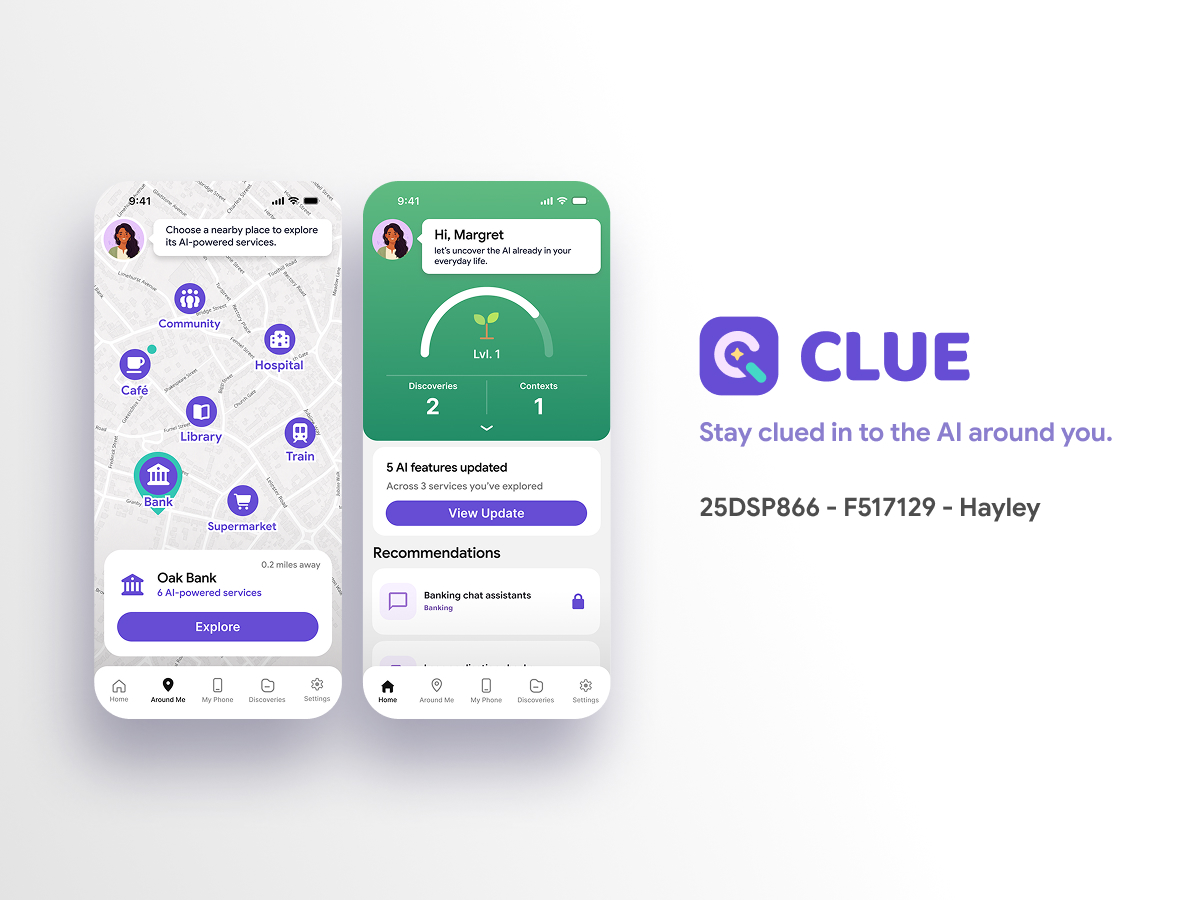
Over 10 weeks, this Major Project built on my previous research into algorithmic truth-making, exploring how AI shapes trust and decision-making. I shifted my focus from trust in AI to access and agency, looking at older adults who know about AI but often see it as unrelated to their daily lives. Through research, prototyping and user testing, I developed Clue — a learning service that helps older adults recognise where AI is used around them, understand how it works, and decide when and how they want to use it.
Define
Summary of discover stage Last semester, I explored trust between older adults and AI. It showed that trust is affected by many factors. I found that an AI experience should be based on value-based inclusion, provide future agency, and give proof before trust.
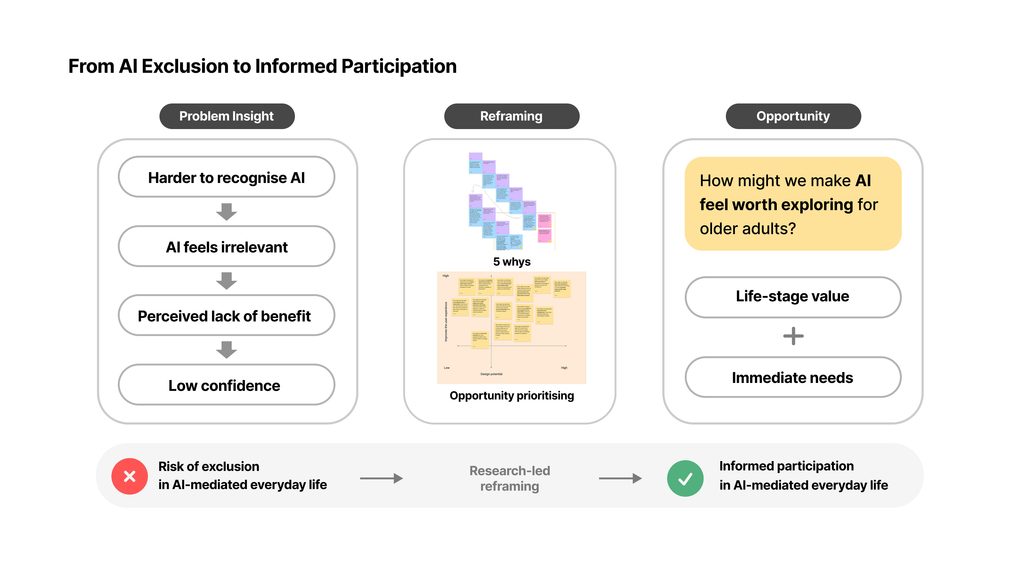
Looking into the data AI is still hard to recognise, and older adults find it hard to see the benefit. This leads to very low confidence. So the real challenge is not using AI tools or their digital skills, but noticing where and how AI already appears in everyday services.
Opportunity Reframing Based on these insights, there is a high risk of exclusion for older adults in AI-mediated everyday life. So, how might we make AI feel worth exploring for older adults, combine it with their life-stage values and immediate needs, and help them participate in AI-mediated everyday life?
UX Vision
There is an opportunity for a digital product or service for older adults who aware of AI, helping them overcome the feeling that AI is irrelevant or just another technology to keep up with, so that they can understand how it may support future wellbeing, family responsibilities and independence.
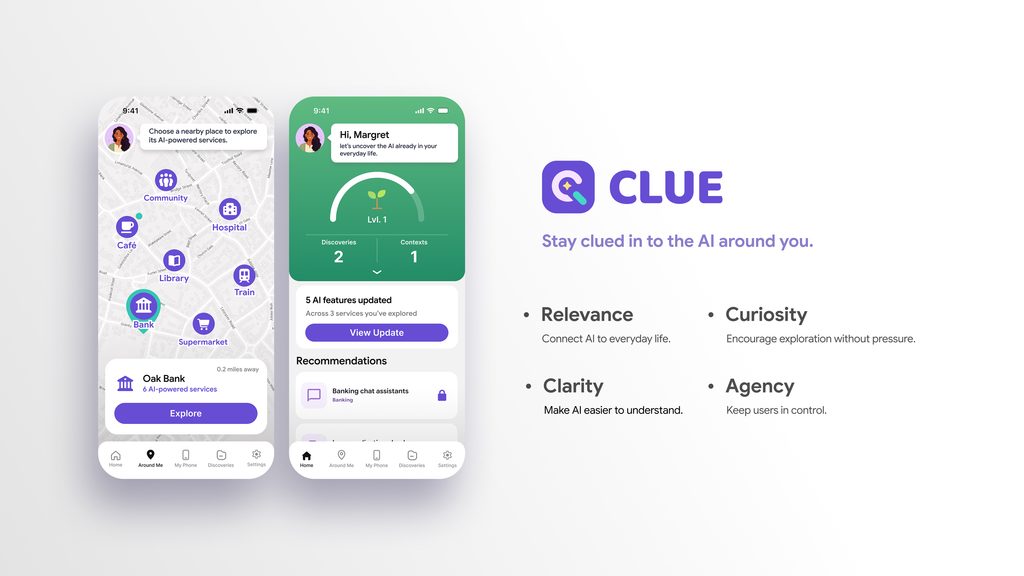
Principles
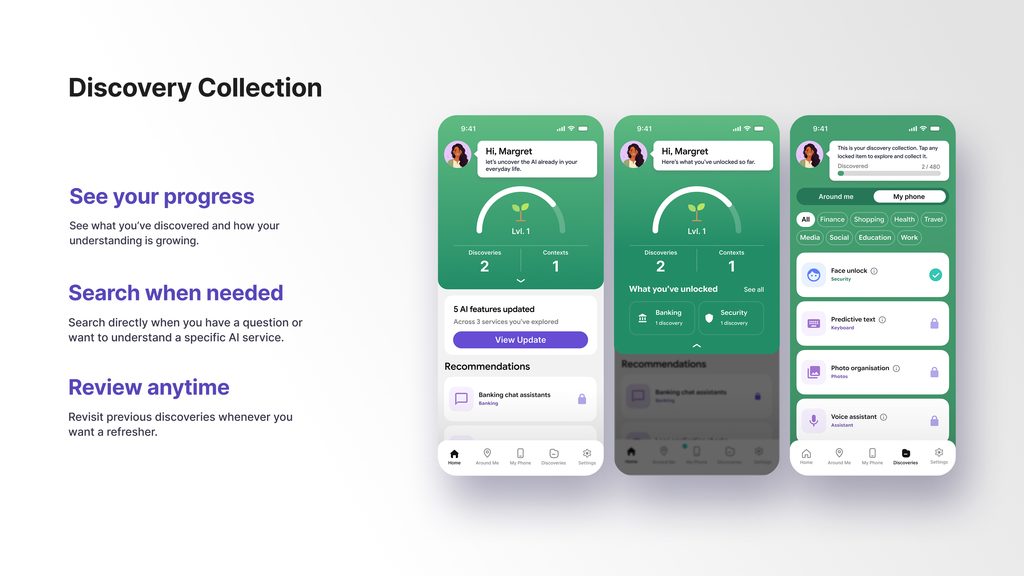
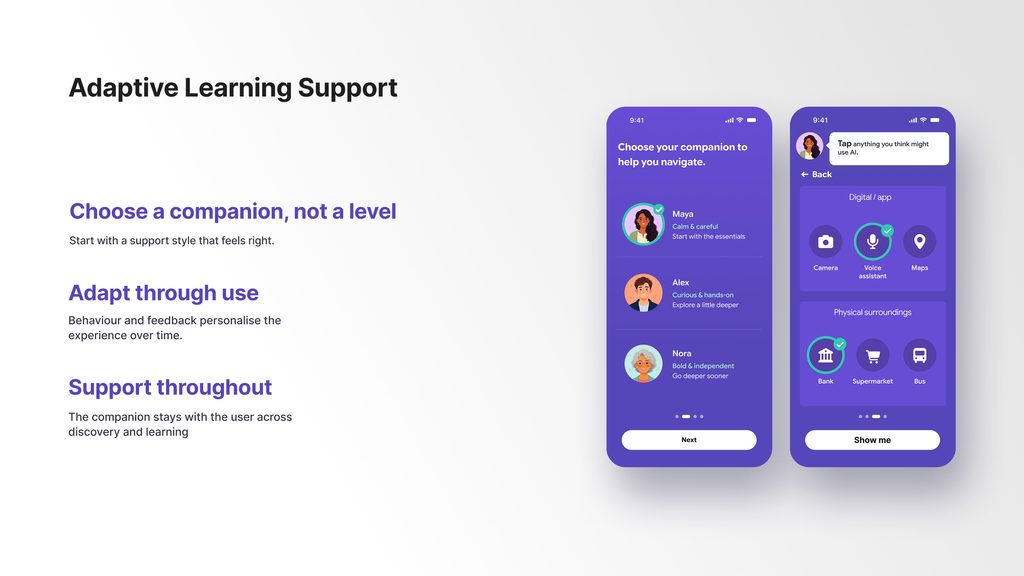
Key features
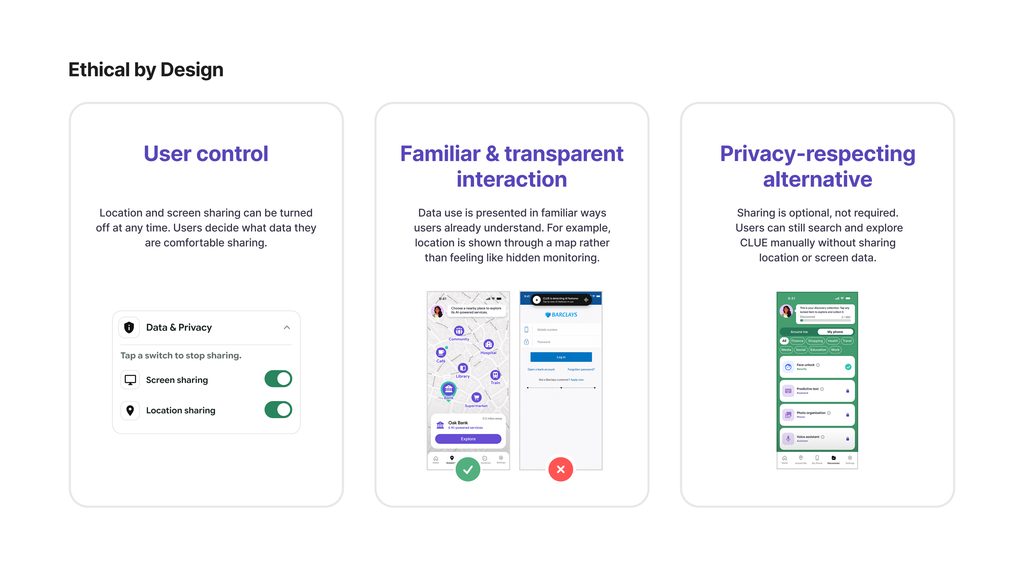
Ethical by Design
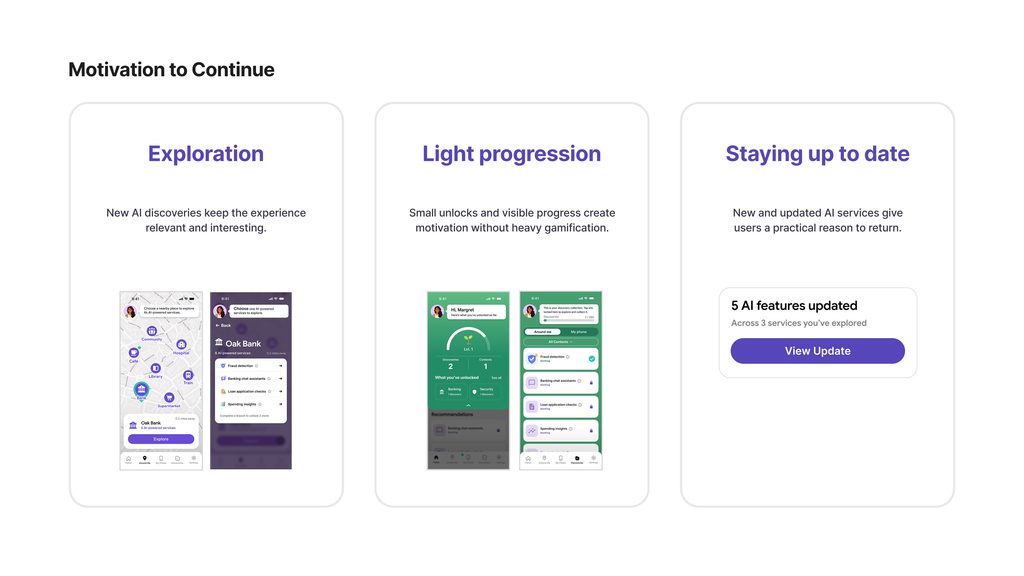
Motivation to Continue
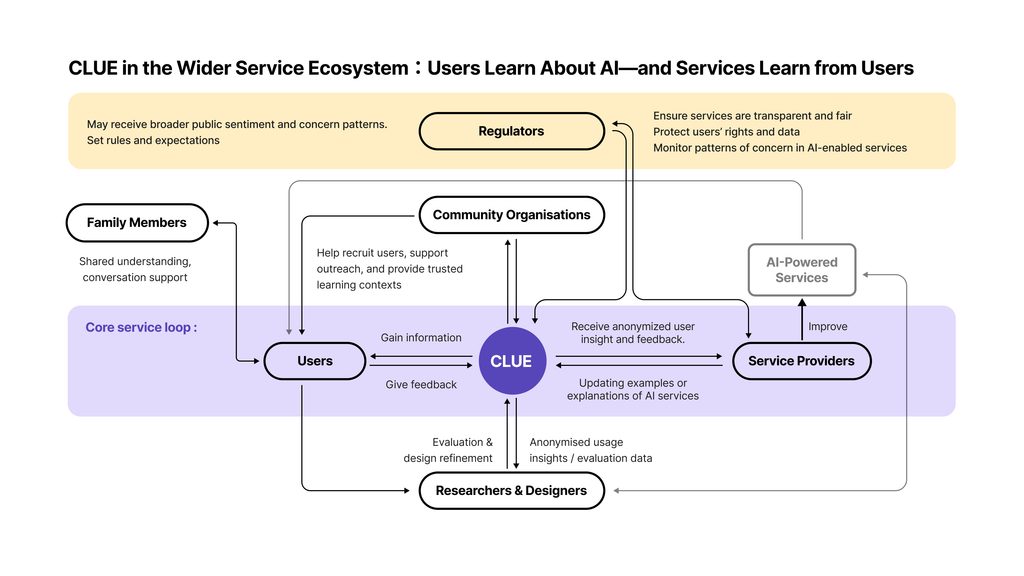
CLUE in the Wider Service Ecosystem: Users Learn About AI—and Services Learn from Users
How did I get there?
Develop
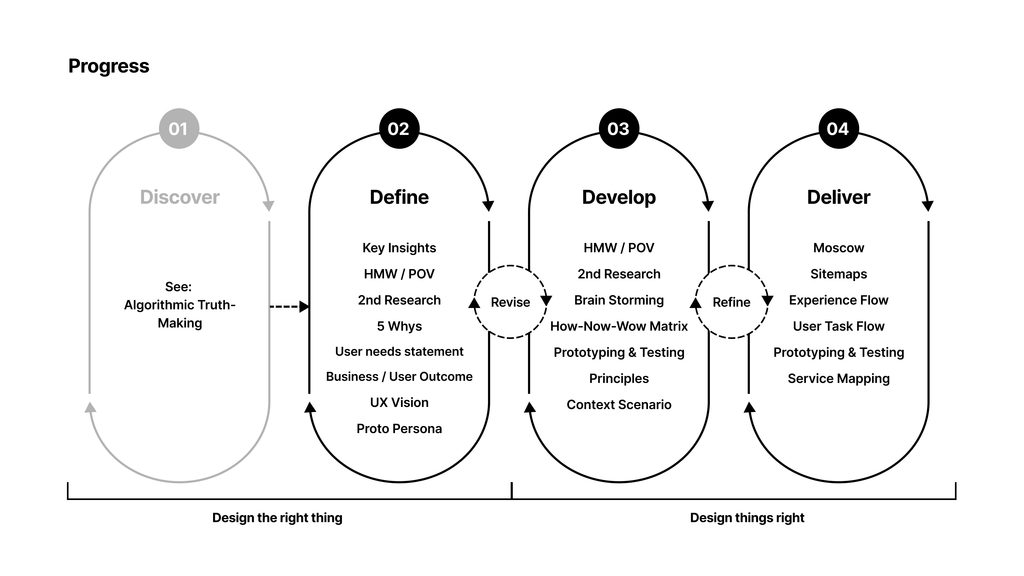
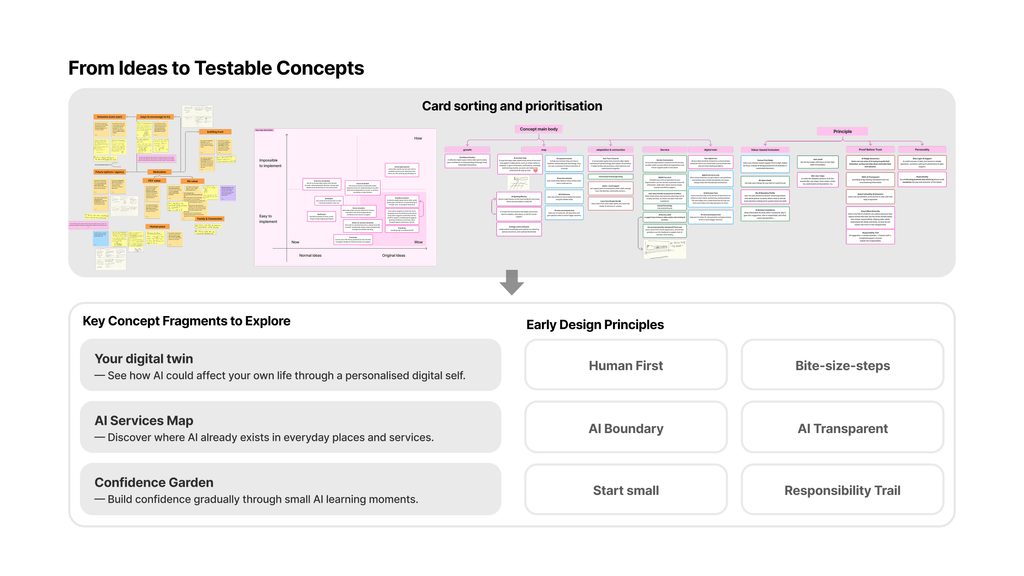
I conducted several research-led ideation methods. Then, through data synthesis such as card sorting and prioritisation, I got three key concept fragments. They were related and later combined into one. At this stage, I also developed some early design principles.
Tested the three concepts through quickly prototyping.
I also mapped a day in Margaret’s life to see which services she used most. I found that AI was largely invisible during her daily routine. It was only more noticeable in high-stakes moments, such as banking and the NHS.
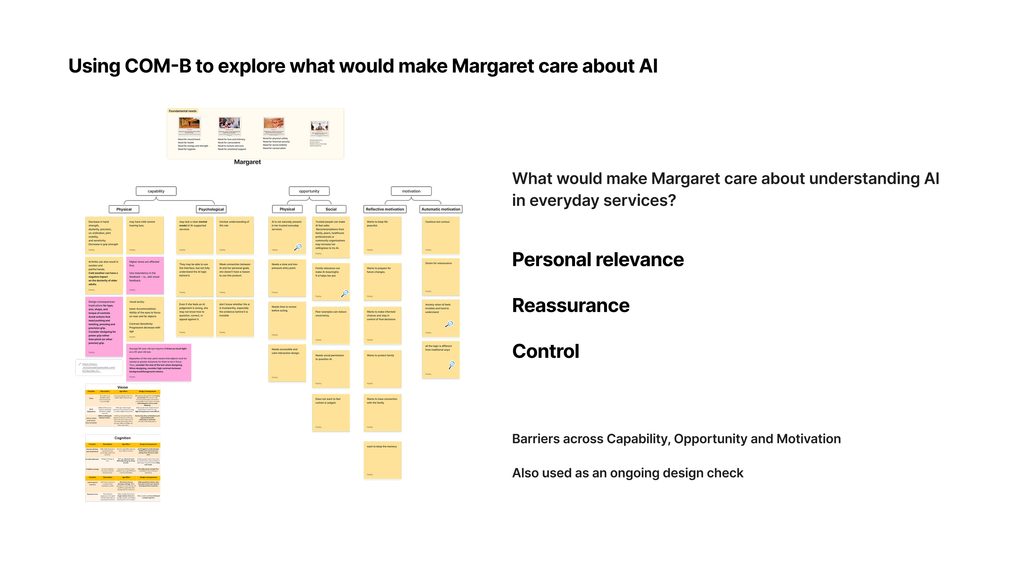
I used COM-B as a design check for motivation. It highlighted personal relevance, reassurance and control.
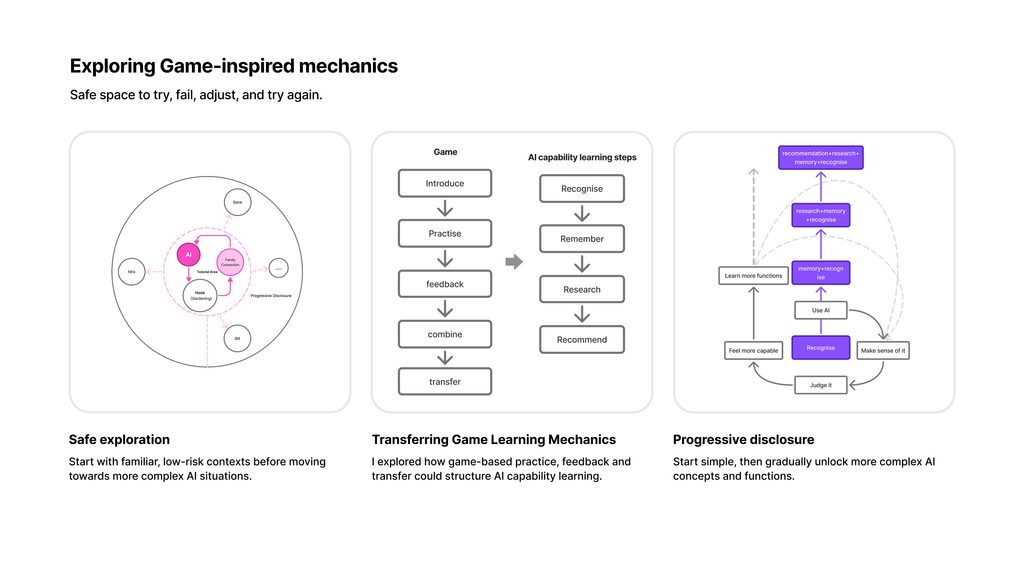
I also explored game mechanics to see how they could apply to my product.
Deliver
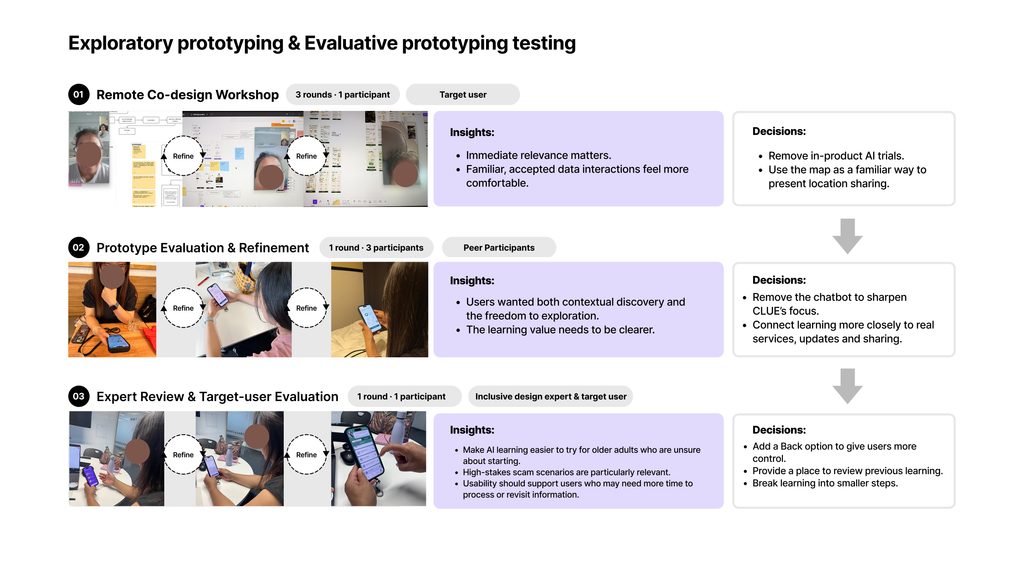
I ran more than seven rounds of flow design, wireframes and low-fidelity prototypes, followed by co-design and testing. Each round helped me refine the design.
I tested in both exploratory and evaluative ways.
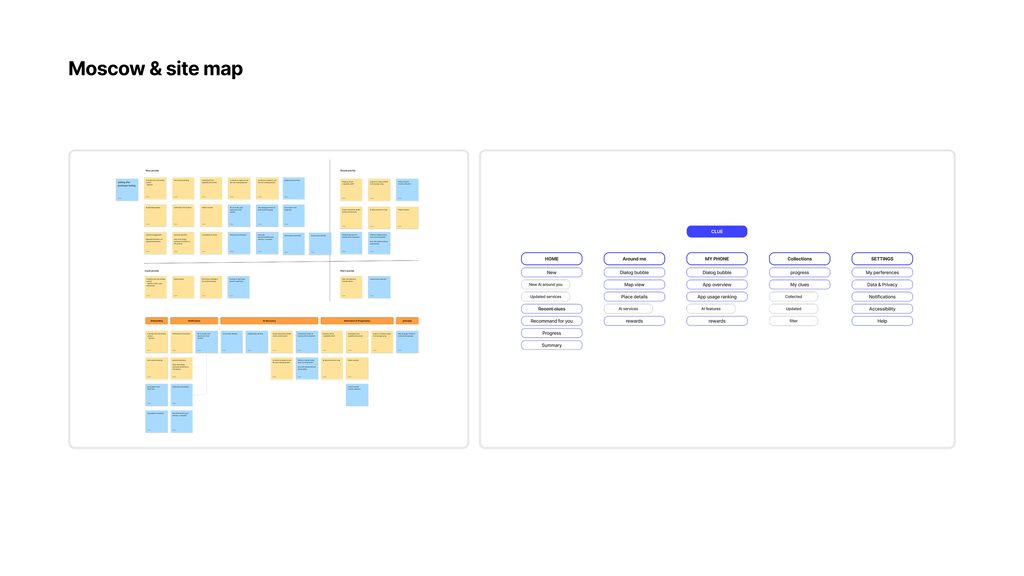
Organised my design through MoSCoW and the sitemap.
A general experience flow with three entry points
Hayley Liu — Multidisciplinary UI/UX Designer with 5+ Years of Experience, Specialising in Game UI, Complex Systems and Research-led Product Design
I was a game UI designer. That does not only mean I tended to think about gamification. I was used to working with a defined world and a clear art direction, so I had a relatively clear direction and result, but limited control.
For this major project, I kept reframing the problem through research, prototyping and testing. The direction emerged through uncertainty.
I also started to see my career in a similar way to design: accept uncertainty, explore possibilities, prototype a direction, reflect and refine over time. It does not have to be a fixed title.
Around fifteen years ago, there was no clear UI/UX role, and smartphones had only just been invented and launched. Positions keep changing. So I have to find what I value. I want to do meaningful work, have creative ownership, and continue to have variety and growth. That is what I value.
Other Works
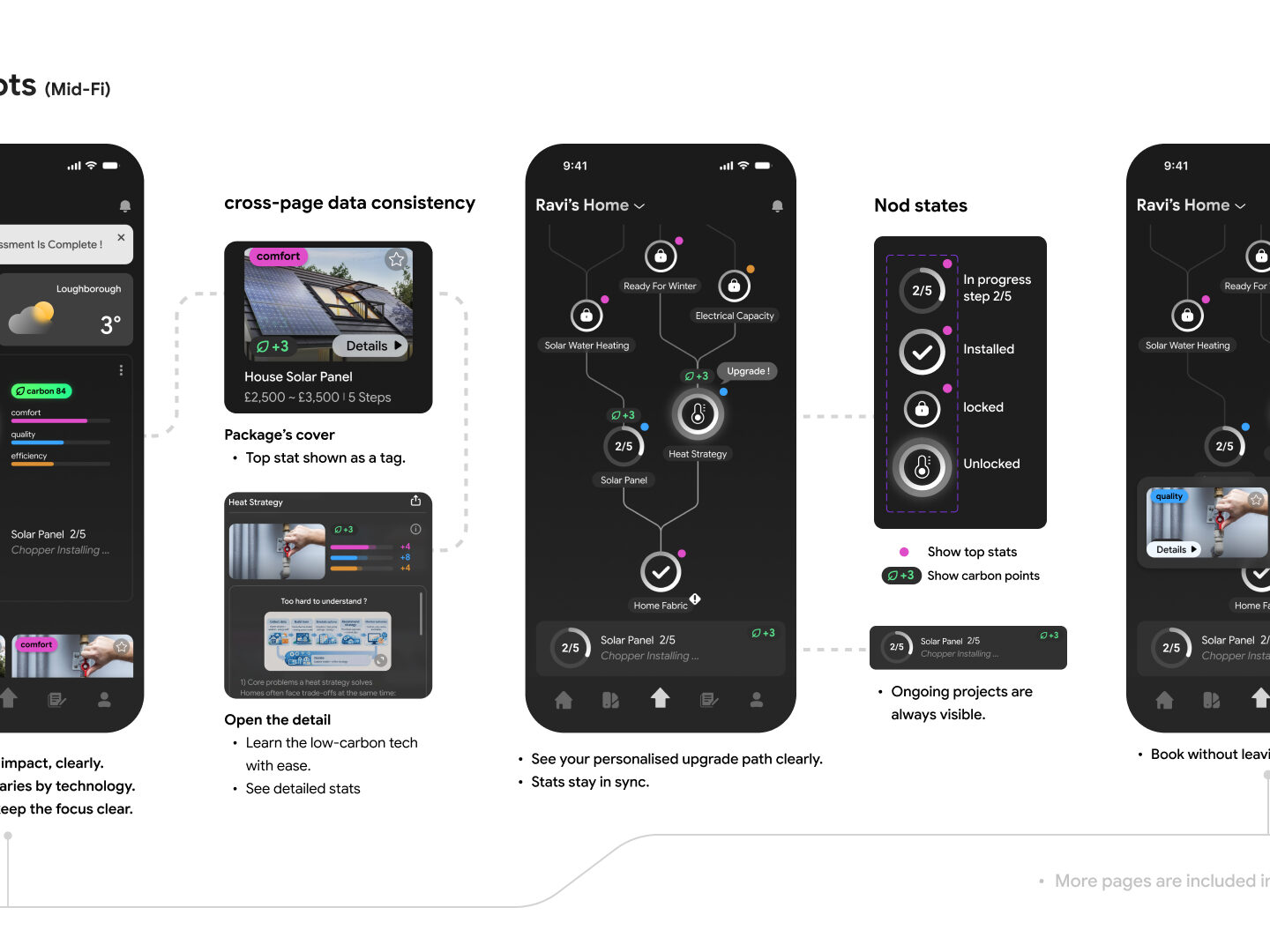
Product Design | Experience Design | Industry Collaboration | UK Households | Low-Carbon Living | AI for Good
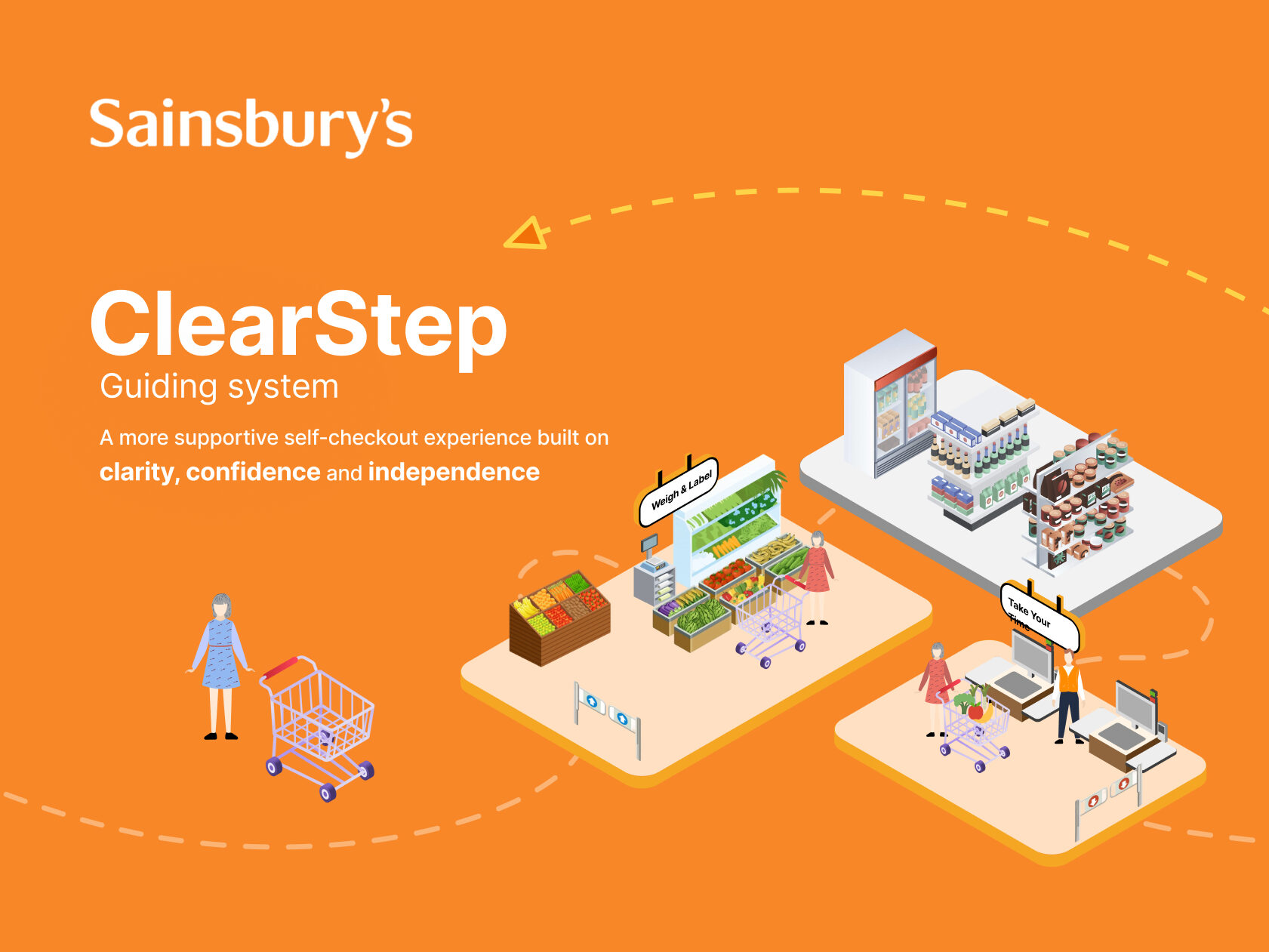
UX Research | Revenue Loss Prevention | Self-Checkout Experience | Service Design | UX Design
UX Research | Inclusive Design | Human Interaction | Smart Home
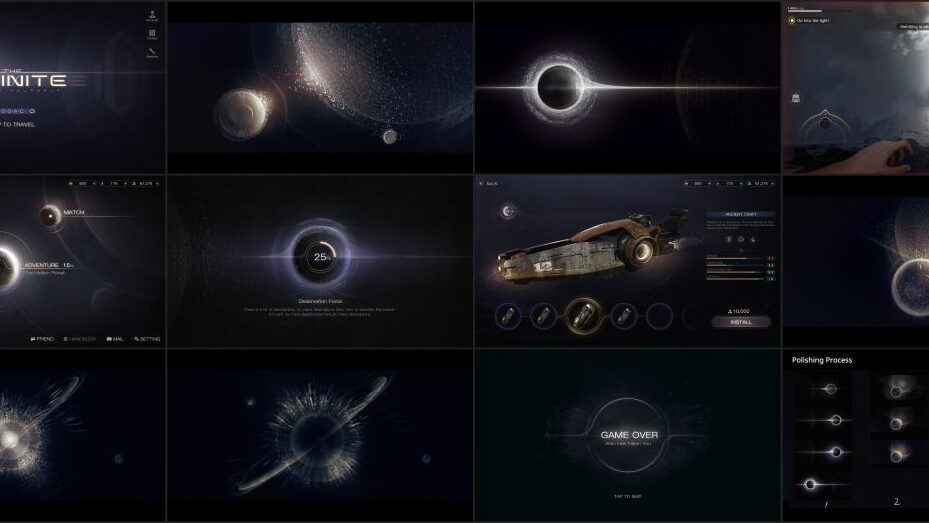
GGAC Award / UI Design/ Game Design / Visual Concept / 3D Assistance
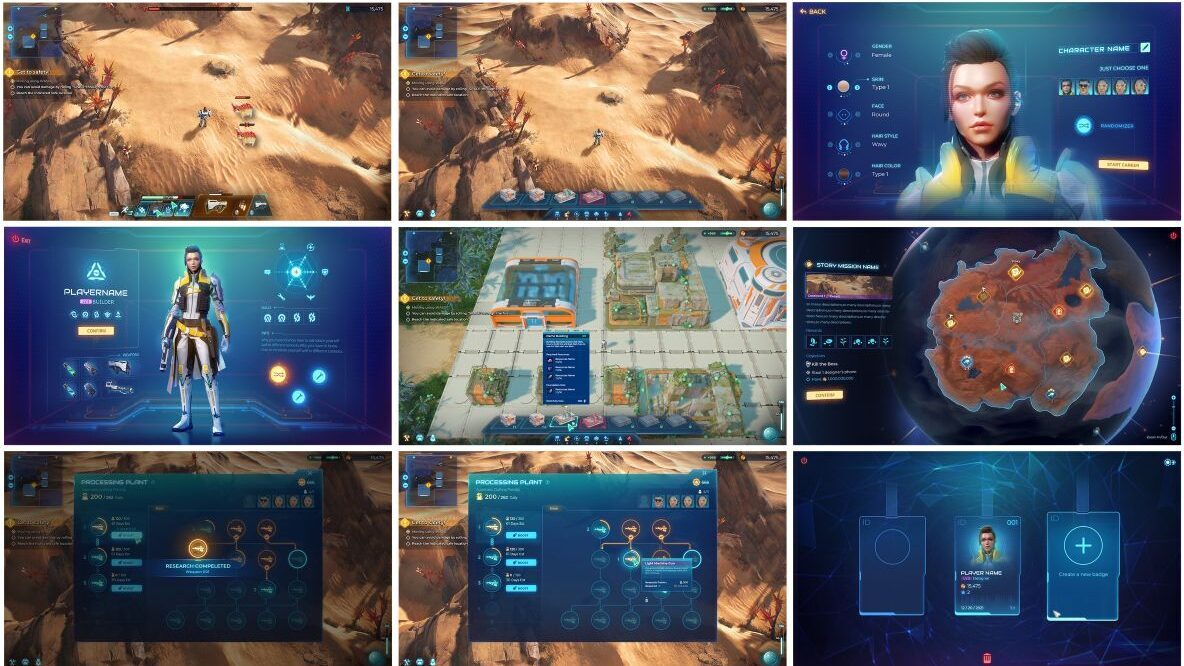
ARPG / Launched PC Game / UIUX Design / Visual Concept / Guidelines / Motion Design / Management